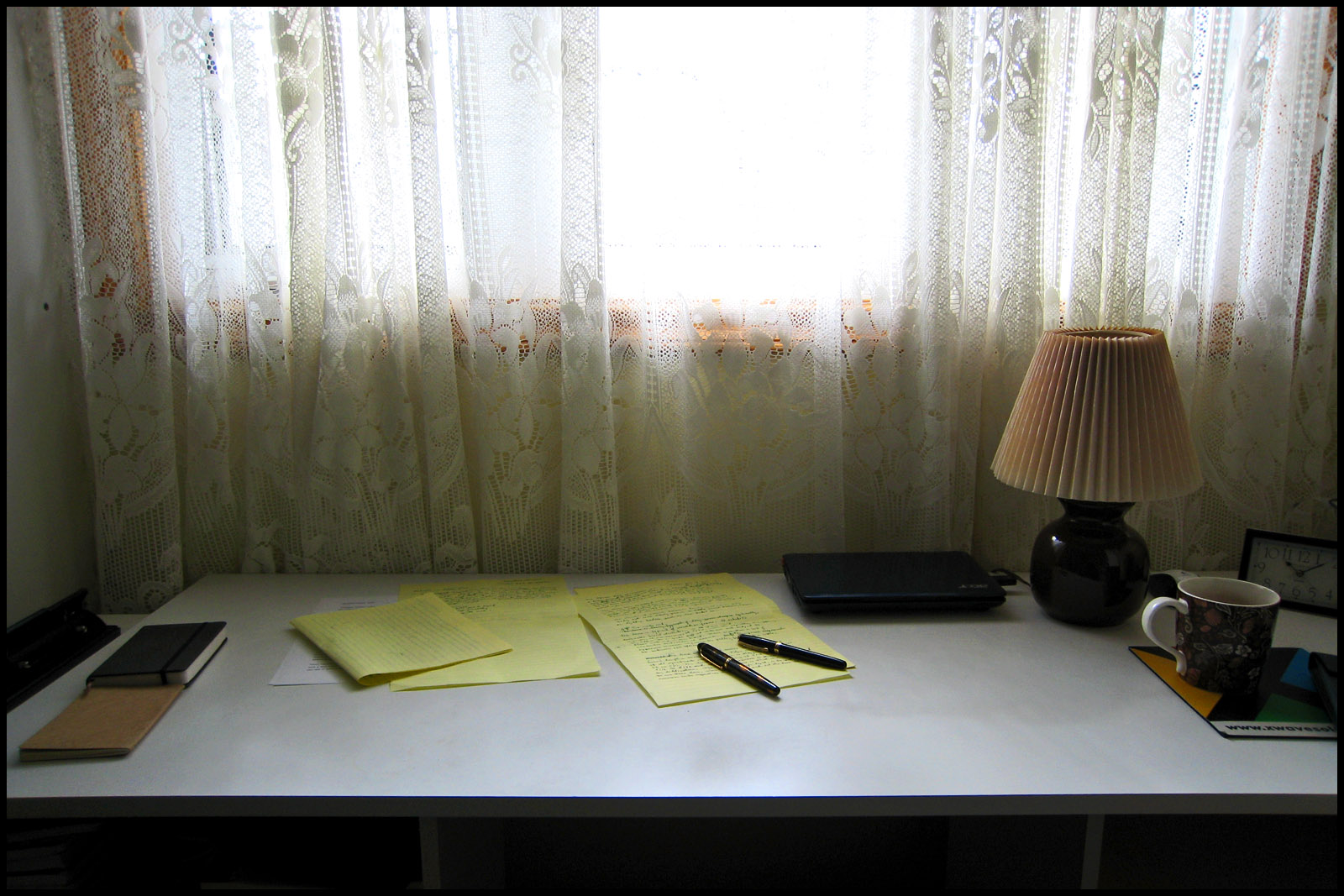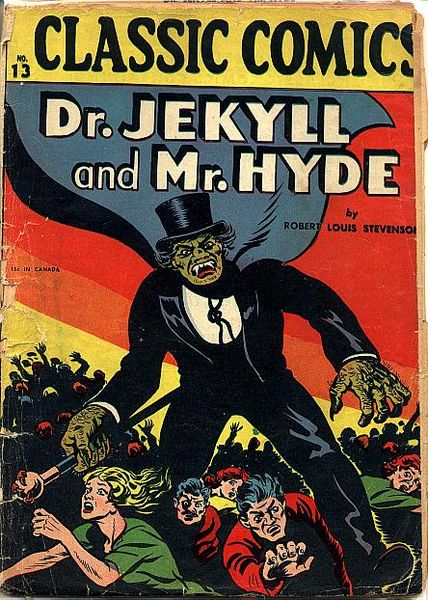
Jekyll and Hyde. Journalist and Writer.

Split personalities. Journalist vs Writer. They don't make medicine for that.
Split personalities. Journalist vs Writer. They don’t make medicine for that.

I’m finding it difficult to wrap my mind around two things that are the opposite — journalist and writer.

How could they be different? To me one is Saturn and the other is Mars, same solar system but completely different planets. Let me explain.

The journalist part of me came of age before social media and blogging. I maybe under 40 and look 28 but I am a bit old school in this fashion. To be a journalist one must be impartial, no opinion either way and your personality had no business in your writing. Just the facts, madam. That was preached and weaved into my journalist DNA.

But on the other hand, I’ve been blogging since 2002 when Blogger.com was new and the Columbia Journalism Review had written an in depth article on the subject in the magazine. (Did they have a website then?) Blogging was cool in my head and I loved writing a blog. I took to it like a duck to water.  More than 10 years later, I’m still doing it.

And then there’s this writing thing. I’ve been doing this longer than I’ve been a journalist or a blogger. I always knew I’d be a writer and that I’d dedicate my life to the written word in some form. I knew I’d write books and short stories. I knew that I’d live my life chasing this dream down and I knew that one day I’d be good enough for someone to publish something with my name on it. On the other hand, I also knew that I’d be a reporter even if the day came when I couldn’t do it anymore. That switch doesn’t turn off.

So when it came time to “be a writer”, it was easy to be a blogging writer. This was during the time I like to call the belated quarter life crisis. 

But I was still a journalist so I created two personas — Jekyll and Hyde, journalist and writer. The journalist didn’t blog but the writer did. The journalist didn’t give an opinion but the writer did. Journalists are not interviewed but the writer was several times over.

Something happened in those years I was trying to decide who I was and when I was supposed to be the person I was supposed to be. The lines blurred. Journalists not only blogged but started websites — built them, populated them with content, promoted them. Journalists became marketers the way writers had to to promote their books. Now, journalists have to be personable, have personalities, interact on social media, and brand themselves. I was already doing that as a writer.

Essentially, journalists have become writers. Writers are journalists. Everything intertwines with everything else. The journalist/writer combo can exist out in the open as one strange, happy hybrid using social media as an engine. It’s weird. Not sure I like it yet. Maybe I’ve spent too long being a split personality.

This new realization has become more apparent as I moved from WritingtoInsanity.com to this site, which I’m building into my permanent home. (We’ll see.) In making decisions on content, I find myself longing to go back to Writing To Insanity because the focus was clear — that was the writer, not the journalist. However, as I’ve written before, I’ve out grown my old site. Perhaps this is where the growth is? This realization that I am both writer and journalist and both can blog. I don’t have to keep it separate; in fact, they should marry.

Still feels weird though. Journowritogger. Yup. Weird.

How to write a book in one easy step

Discipline. Like, get it done, man!

One of my friends is writing a book. I know a thing or two about that.  Written a couple myself. I write books like some buy new outfits.  So, I wanted very much to be the first reader/editor to her book.

She started with gusto, an excitement that placed a grin on her face. Then the book became one of those things that was more overwhelming than fun.

I know that look. I’ve lived that look. I hate that look.

What does it take to write a book? So, many people will say it’s character development, it’s plotting, it’s the desire. For some that may work but for me it’s the get-that-darn-thing-on-paper technique. Some will call it butt-in-chair but it’s a bit more than that.

It’s about a target.

I’ve been really into targets lately. Targets forces you to focus. The bull’s eye in the middle of all those circles is a goal. Gotta hit the small circle to win.

Writing a book is a bit like that — you got to have a goal and for that first draft the goal is to finish it.

This is what I suggested to my friend: NaNoWriMo it.

Yes, I made that into a verb.

NaNoWriMo is the short version of National Novel Writing Month. Happens every November. It’s awesome. The basic premise is to write 50,000 words, a novella length manuscript, in 30 days.

Now, there have been some writers I’ve run into that hate — HATE — this concept. To that I say judgmental, much? Don’t worry about everyone else’s book, mucky muck writer. You have your own book to finish, don’t worry about the rest of the mortals.

So, I suggested to my friend that she take the next 30 days to write the first draft of this book. This is where she’ll put down the bones to the story, the basic what-for-nots. Writing, as I’ve said countless times, comes in the revision. That’s where the meat gets put on the bone. There will be several revisions and rewrites and new levels of frustration. But that level can’t happen without bones.

I also shared with her something that was helpful to me. A NaNoWriMo spreadsheet. It’s just an amazing thing that made me so happy and helped me win last year’s writing quest. You can keep eyeing your progress through out the process and it will count down the days and words until you get to 50,000.

So what does it take to write a novel? Discipline. Simple, right? Simple like pulling a 747 by yourself. But it’s still fun and still part people people’s dreams as it should be. Nothing compares to watching that baby print for the first time once it’s all done.

I promise. Go. Write.

Out with the old, in with the not done yet

A new blog is like spring, expect techie.

My mom has this theory.

If you never get rid of anything old, there would never be any room for anything new. I didn’t believe her until now. Those dichos from the old country, those nuggets of wisdom, they get lost in the translation between here and there.

I’ve out grown my blog and I’m torn up about it.

I’ve had WritingToInsanity.com for five years, since January 2008, and I remember the day I started it. It was during the crisis of 2008, when I turned 30. This was the year when I looked around me and all I could see was failure. Unhappy in a job that made me more unhappy (though I didn’t understand that at the time) in a place I never knew I didn’t want to live in until I got there. And yet…

And yet I did everything right. I did everything everyone had ever asked of me. I studied. I worked hard. I graduated. But I was so unhappy. That prompted me to think about when I was truly happy. When was the last time I was absolutely blissful?

That’s how WritingToInsanity.com started. I wanted to find my voice again, figure out who I really was, and what I really wanted. I knew I’d get there by doing two things: reading and writing.

So, I read and wrote. A lot. That’s when I discovered Junot Diaz and Roberto Bolano. That’s when I rediscovered Ana Menendez and Cristina Garcia. That’s when I finally finished my first book (it’s horrendous) and found myself a circle of writers who helped me become better. Eventually, I got good enough to be accepted into graduate school and wouldn’t you know it, I actually earned one of those writing degrees. I chronicled all that on my blog and a sense of freedom returned to me. Breath had returned to my body and my voice, which I worked so hard to suppress, was beginning to return.

Old school Writing To Insanity header.

As I grew stronger so did the blog. It gained a bit of popularity. It housed posts about t.v. writers and DIY writers and hosted writer interviews, some of who are my friends.  That little blog saw the creation of the Holiday Blog Tour and video blogs and podcasts. This was my baby, my creation, and no one was going to tell me what to write. Freedom. Complete blissful freedom.

Then something happened. I grew away from it. I didn’t want to write about writing anymore, I wanted to write about other things–issues that had become important to me, essays about my life. I wanted to tell stories, not write blog posts about writing stories, which is what the blog was becoming. I felt that if I was a writer, why was I writing about writing with little to show for it. Writers write. It’s disingenuous to tell people how to do it if you’re not doing it yourself. I don’t know about you but I learn best by example. Brilliant writing should exist as the lesson and the rest of us should take time in learning from it.

Again, writers write. I wanted, NEEDED, to write.

So, I committed blogging suicide. I stopped updating. Then I brainstormed about what I wanted to write. Seriously. I took myself to a coffee shop, wrote down a list and started the beginnings of what this site would become but always with the focus of telling stories. That’s what I hope to write here.

Right, so, if you look in the menu bar you’ll see the fruits of my coffee shop brainstorming. My commentary is there. Essays (which this post falls under) is right next to it. Travel writing has been an interest of mine so I’m going to give it a go. There’s a listing of my published work both in fiction and non-fiction, which I’ll be putting together soon. And finally, because it was five year of self-discovery and because there are things there that maybe useful, a link to WritingToInsanity.com, my baby.

This is not to say, of course, that I’m done writing about writing. I think some post will pop up just for old times sake. Those will be essays and of course be tagged (what else?) writing.

I’m proud of the work I did with the old spot. But all things must come to an end and this is one of them. Take out the old to make space for the new. Here’s the new space. Let’s fill it with a bunch of new adventures, shall we?

Nothing’s wrong with Texas that doesn’t need to be wrong

Seal_of_Texas.svg

This question drives me insane.

You could ask this question about any state, especially those south of the Mason-Dixon Line. We’re a different breed south of that line. So different that understanding us is difficult.

But Texas is, well, Texas. We have this verbrato the size of our great state. Frankly, we have the right to do it; size matters, especially in politics.

I find it interesting that the folks who ask this question tend to be the people who don’t live there, never lived there, or lived there long enough to know that August is the hottest month and that we take our barbecue seriously. In essence, they lived there long enough to have some credibility with everyone except honest-to-goodness Texans. They are the ones looking outside in. They glare at the biggest state in the lower 48 and ask what’s wrong with us?

Nothing is wrong with Texas. We’re changing. This is what change looks like. This is what it looks like when the demographics change but the leadership doesn’t. When things don’t align, when decades of business as usual is no longer usual, you have two senators vote against an immigration bill that would impact their state. When the leadership has been repeatedly voted into office by, quite frankly, people who bothered to pay attention, you have a state trying to pass an abortion law. When you have lawmakers wanting to ensure the dominating role of one population over a traditionally disenfranchised group, you get bills wanting to stop them from learning about their history.

Yes. My home state sometimes mortifies me but to all you Yankees and Non-Texans I offer you this.

I offer you the filibuster heard ’round the world, which made political heroines out of  Wendy Davis, D-Fort Worth and Sen. Leticia R. Van de Putte, D-San Antonio. These women stood up for women’s reproductive rights against Governor Rick Perry and minion Lt. Gov. David Dewhurst. Supporting them were hundreds if not thousands of fellow Texans in the gallery, outside its doors, and all around the world via webcam.

I also offer you the Librotraficantes which, upon hearing a state lawmaker offer a bill similar to Arizona’s, became proactive an lobbied for its death. It never went further than committee.

While U.S. Senators John Cornyn and Ted Cruz failed to represent all Texans in the U.S. Senate on the immigration bill, the politicians did their jobs. They represented the people who showed up on voting day. Their vote is not, nor will it ever be, surprising.

This bipolar Texas embarrasses me and yet fills me with pride. Not but a couple of years ago the leadership would do what it always wanted without a peep from the people.  With the demographic change in Texas, more Latinos become more affluent, the state becoming younger and more vibrant, scenes like those witnessed by a global audience this week will happen more often.

So, what’s wrong with Texas? Not a darn thing. We’re experiencing growing pains never before experienced in our history. And we’re doing it on a world stage for all to see.

It’s about time, don’t you think?

– Posted using BlogPress from my iPad

I’m brown, let me in. The case of Affirmative Action

ImageI am the product of affirmative action.

It has gotten me in front of people who I never would have seen, to plead my case on why I was more than qualified to be part of their world. I’ve won some of those arguments. Others I’ve lost. But I’ve never once thought that I didn’t deserve to win the arguments I did.

Maybe because I see affirmative action as a double-edged sword.

Today, the Supreme Court ruled 7-1 to kick the decision on whether race can be used for admission back to the lower courts. It’s up to them now to decide if admission based on race is okay or if it’s an antiquated means to ensure diversity.

This is how that sword swings one way:

The original point of affirmative action was a chance. That’s it. To give those who needed the opportunity to take advantage of it, grasp it with both hands. What they make of that opportunity is completely up to them. For a person like me, it’s perfect. It’s not that I’m smarter, faster, or better than anyone else; it’s that I’m just as capable as anyone else. I can do this job/classwork/etc and I’m worthy of the respect of at least being considered.

The problem comes when affirmative action is used as the sole reason for admission or for granting a job. That’s like saying I’m just going to buy red fruit for the summer because I’m deficient in strawberries. There is a balancing act, a talent, to recruiting. Affirmative action should be one, not the only, way to recruit for diversity.

Here’s the other way the sword swings:

Because of this laziness, there are some who don’t deserve to walk in the door, much less be considered. Newsflash: Just because they’re a so called “minority” doesn’t mean they are qualified.  And it’s okay to say that. Really.

There has been may times where I’ve walked into a situation where I know I’ve been invited to the table because I fulfill two quotas –black and Latina–not because I was qualified. It’s during those times that I feel the worst and wonder whose spot did I just take who really deserved to be here?  That does nothing for me and the humble cause of diversity, it weakens it and makes it into a farce.

It’s also disrespectful me and the work I do.

Let’s also consider this. Now that I’m older and have seen other affirmative action grantees come behind me, I see a generation who has always had this at their disposal. They expect to be given things because of the color of their skin, not because they earn the opportunity. The result I’ve seen is sub par workers and students and heartbreak when they have to be escorted out the door.

Then what is the solution? Affirmative action or not? You solve this by answering a couple of questions.

  • Are there schools that are underfunded?
  • Are there schools that are drop out factories?
  • Are there schools that don’t have highly qualified teachers?
  • Are these schools in mostly brown, black, and poor neighborhoods?

Then we need affirmative action because there will always be need of an opportunity for people who didn’t think they deserved one.

I argue that the problem is in the implementation of it, that it is used as the factor and not one of the factors to employment and college admissions. The goal should simply be this: will this person be successful? How would we help them to become successful? If the answers to these questions are unsatisfactory, move on.

You and they will be glad you did.

Does being Latina exclude me from being Black?

Black or Latina? Why do I have to chose?

The conversation was one I didn’t know would happen but I’ve had before.

After Paula Deen was unceremoniously booted from the Food Network today, I get a tweet from a friend about the incident. Essentially part of the conversation went like this:

She: what did you expect from someone from the South.

Me: But I’m from the South. We’re not all like that.

She: But you’re Latina.

This wasn’t the first time I had heard this phrase being used to exempt me from a group. In my life I’ve had many exemptions from several different types of groups. It’s also a Latino exempting me, giving me a pass because my last name ends with a “z”.

The last time I had a similar conversation was when a friend spoke unkindly about Black people. She had called them cheap. She had sneered and was disgusted by them, their behavior in public places. They were all the same, every last one.

We were in a circle of friends, we were all Latinas. Everyone of us could roll our tongues and speak Spanish.

We were also all educated, graduates of the same university. We were professional women in our 20s. And yet…

“You know how they do,” she said.

Then I cocked my head to the side. “But you’re one of us. You’re Latina,” she said.

I said nothing. I should have said something but I said nothing because she was right. I am Latina, I’m not like them but yet, I am. Does being Latina exclude me from being black?

I didn’t think so until a couple of years after that incident. I was older, more mature and secure in my authenticity– black and Latina, red beans and rice and lechon.

Another circle of women. We were all black, professional, mature, educated. It was a night of girl talk over drinks and dinner. We talked about the stars we found the most attractive. They all said men like Taye Diggs and Idris Elba. I said Eduardo Yanez.

The quiet lasted a minute before the conversation continued but on another topic.

With this group I didn’t get a pass. I wasn’t black enough for them; they said that without saying it. While my color and the texture of my hair made them comfortable, my Latina-ness reminded them I was different and different people are not allowed to be Black.

While this is probably not how they thought, that’s how it felt by the person doing the tap dancing. The same goes for my Latina friends, the ones who give me a pass.

However, being Latina doesn’t exclude me from being everything else I am — Black, Southerner, writer, whatever. Why should I have to chose to be one thing. That’s whats so glorious about being a human being, the complexity of existence and the beauty of loving it all.

The fact is I love all of my selves and all the selves I have yet to discover. Choosing one would be denying pieces of myself, making me one dimensional and the writer in me knows how much of a bad deal that is.

It’s interesting this new way of passing. Where at one point passing was a color thing, for me it’s a culture thing. I have to be black enough for the black folks and Latino enough for the brown folks. There’s never a happy medium, adjustments are always made.

But the instance someone forgets I’m in the room, I’m given a pass. That’s just how it goes.

– Posted using BlogPress from my iPad

Fueling the broke writer with noodles

This Ramen take brought to you by the Steamy Kitchen

I’m not going to lie. Sometimes, being a writer is not glamorous.

Yes, it’s amazing to use words to create stories as you own personal magic power. But sometimes it not as fruitful as you would like it to be.

No, this is not a blog post about how writers are poor but rather the fuel that keeps the writer within budget. It also keeps college students feed as well.

The Ramen Noodles diet. The food of champions.

Since I was just talking about this with one of my Twitter followers, I did a bit of Googling and thought this would make a good really quick post.

If you find yourself on the trying end of being a writer, here’s some help on the Ramen Noodles side of the life.

Writing links to LOVE

Here are some cool writing links I came across the past week or so. Enjoy! 

Commentary writing: What I learned writing for the Guardian

So freakin proud of this! Can’t wait to write another. 

Here’s a bit about writing that I learned while writing what you see in the picture.

Once you know what you want to say, the words flow. It’s the not-knowing-what-to-say frustration before you know is what keeps me up at night.

No. Not literally. But I worry about keeping the writing flowing.

Part of that happened when I wrote my op-ed for the Guardian US.

Side note: I have to say that seeing my name–my full name–in the Guardian on a piece that I loved to write was exhilarating. Highly recommend it.

But I digress. When I take a look back at the process of writing this op-ed, three things come to mind.

1.) I hadn’t written anything opinion-y since college. (That was a lie I came to find out.)

2.) I wasn’t sure if I could write something with my opinion. I’m a reporter after all. (Also a lie.)

3.) I had no idea what I was doing. (Only sort of a lie.)

So, let’s take the first lie.

I hadn’t written anything opinion-y since college.

Anyone who has read this blog for any amount of time knows how much of a lie that is. I give my opinion all the time! But my opinion that has nothing to do with writing? That was a little tougher.

That essentially is what I wrote here.  I wrote a blog post with just a little bit more opinion. I found it fun actually to combine two of my skills, reporting and opinion writing. With the help of my editor at The Guardian, I was able to hone in when to use my writing flair and when to be journalist. It’s a skill I’m still learning.  I’m getting some practice now with the new column I’m writing for work but it’s a skill I’m looking to master.

I wasn’t sure if I could write something with my opinion. I’m a reporter after all.

Reporters have opinions. We express them among ourselves but if they are anything like me, they don’t express anything in public. Yes, I express lots of opinions here in this blog but nothing too political. What’s more political than Latino population in the South? Well, lots of things but for sake of argument, it’s political.

Giving my opinion on this topic was the hardest part. Again, I did have to do some reporting on this and I found myself falling back to my roots. Mentally, I had to say it was okay to write what I thought and to be able to defend it.

Felt weird.

I had no idea what I was doing. 

And because it felt weird, I didn’t know exactly what I was doing.  Seriously. I took an editorial writing class in school and has a column in college but that was about it. Again, lots of thanks to my Guardian editor because she really walked me through with her edits.

But even then, I’m not sure I can do it again. I’ll try and hopefully it will be good enough to have another byline in The Guardian.

So how about you? Did you write something that was out of your comfort zone? How did you do it?