A Valentine for my Valentines

From Flickr

As I am in deep graduation mode, I thought I’d dig up a blast from the past.

Back when I actually had more time in my life (think pre-MFA and when only 12 people in the whole world read this blog) I use to do serials. Think Charles Dickens but with a blog.

One of the serials I did was called The Last Single Girl (this was also the time in my life when I wrote women’s fiction.) So I dug this up especially for you, in case you needed a Valentine themed story.

Happy Valentine’s Day!

Part 1
Part 2
Part 3
Part 4
Part 5
Part 6 and final

#MotivationMonday Seven reasons why writers should love Valentine’s Day

I’m not a fan of red around this time of year.

Tomorrow is Valentine’s Day and by this time every year I become disgusted with the heart shaped boxes and the stuffed animals. But as a writer, this is a great time of year. The stories write themselves. Love is the single most reason that characters do what they do. Even the other motivators like greed (i.e. the love of money) have its roots in love. First love, love at first sight, love gone wrong — all of these themes are great building blocks for epic stories. 
Don’t believe me? In 2010, Romance Writer’s of America reported that romance book sales were at $1.35 billion. That’s billion with a “b”. And this was during a recession! 
So here are seven love themes for the writer needing to get some writing done between the candy and flowers.
First love/ puppy love
This is probably one of the most common love themes to write about. Think of your first crush, that feeling of mushiness when you saw him or her. Remember how you would smile and butterflies tumbled around in your stomach? What makes this so popular is that that feeling is universal. Every person, every culture, every language understands this feeling. 
Love at first sight, aka boy meets girl

Just about the same thing as puppy love but more mature. This is when the couple sees each other across a crowded room and something sparks. It can be a cliche but there are things that writers can do to make the cliche less, well, cliche. Change the setting, the circumstances. Change the characters. Writers can have lots of fun with this, they just have to be creative. 
Boy meets girl but girl loves another boy or girl.

Ahh, the love triangle. The vortex of angst for every teenage poet. But it’s still good stuff. Jane Austen built a career on it. Again, the feeling that comes from this is universal and because it is, it can also be a cliche. How to avoid the cliche? Make the triangle into a square or a pentagon.

I love you but you’re crazy


This has to be my favorite one. A cross between Fatal Attraction and well, anything else. The protagonist is in love with Character X but they are one card short of a full deck in someway. It could be dangerous crazy (again Fatal Attraction) or they could be funny crazy. I like this love theme because it already has built in conflict and hasn’t been done nearly as often as the others to be a complete cliche. It’s also the most flexible.

I don’t love you at all so stop calling me

This is the other side of Fatal Attraction, when one side of the relationship wants to break ties with the other. This has to be my least favorite because there really is only one way do can go with this

I use to love you but now I want you dead (or hurt in someway)


The ultimate in you-done-me-wrong plots. Boy meets girl. Couple falls in love. Something happens. Chaos ensues. The typical thought with this is that it ends in tragedy. But does it always have to end that way? My challenge to everyone is to write about this aspect of love where it doesn’t end in the typical way.

True love


By far the more difficult thing I’ve had to write is two characters honestly falling in love in a way that wasn’t sappy but endearing. I’ve used as examples Garcia Marquez’s Love in the Time of Cholera and Leo Tolstoy’s Anna Karenina. (actually Anna K could work for the I love you but you’re crazy category.)  What’s the best way to handle this? I haven’t yet discovered it but what I can say that as a writer, you have to come to those true love scene with a pure heart and a sense of wonderment.

These seven love themes can be inserted into any story. It’s up to the writer to decide how best to use these. Are there any that I may have missed? 

Don’t quit your day job. Writing with a 9 to 5

Gabriel Garcia Marquez was a journalist while penning his tales.

I tell myself that once in a while. When the days are hectic and there is little time to write, I tell that to myself to make me feel better and less guilty for not writing as often as I would like.

Let’s face it. We have day jobs. We have to have day jobs. We have bills. But that doesn’t mean we don’t chase down our dream in our spare time, even if the spare time is five minutes.

One of the best comments I’ve gotten from this blog recently came from someone commenting on one of my Motivation Monday posts. I syndicate my Motivation Monday columns on SheWrites and the comment came from fellow member Allyson Whipple.She said that she uses her work for fodder in her stories. I thought that comment was perfect! Yes! Work is the fodder for our stories. and it’s free fodder. Perfect fodder. That makes it the story only we can write.

So why not write it? Why not use what you have in front of you for inspiration? Fiction, as you’ve heard me say before, is truth and what’s more true than where you work.

So how do you cultivate this wonderfulness? Well, that’s what I’m here for! Let me give you some ideas.

Characters galore!

Think Office Space. Every character there is in every office, even yours. What makes those characters so memorable is that everything about what they do, say, and act is true.

So who are characters in your office? The boss? The front desk clerk. The coworker who keeps stealing your pens? All of them are character gold! Watch them. Take notes. And make use of them.

Heroes and Villains

Every story has them–the hero or villain, the protagonist or the antagonist. Which one are you? Which of your coworkers are heroes or villains? By asking these questions, you start to develop some characters and are well on the way to finding a story.

Plot ideas

So a secretary tries to get her boss fired because she wants her friend to have his job. Interesting, no? Sometimes fact is stranger than fiction and the work place is where this is most true.

Job, offices, etc. are microcosms, meaning they are their own world. Just like it has it’s own unique characters, those character have their own motivations. Their motivation advance the plot of the workplace. Who wants what and why? And most importantly, what are they doing to get their heart’s desire. I’m sure you’ll find the basics– greed, power, etc.

Conflict


What’s plot without conflict! It’s everywhere in the workplace. That’s especially true when there are outside factors at work. Upcoming layoffs, a man or woman having a baby, a opening with more than one qualified candidate, a new boss. All of these are agitators to your story and makes for good fodder.

Hope this helps with the guilt of not writing and makes the 9 to 5 a bit easier to take. You may not look at your coworkers or gig the same way but oh the stories you’ll tell!

Here’s some more thoughts on writing with a day job from Joanna Penn at The Creative Penn. And here’s another writer’s thought on the subject.

Write On!

Am I happy?

Today, I am one year older.

It’s tradition for me to reflect on my life of the past year in the days leading up to it. What did I do right? What did I do wrong? Am I where I want to be? Am I happy?

That last question, made of three words, have always been something of an enigma. Who really is happy? I’ll tell you who. Happy people are happy. But am I one of them.

There was a time in my life when the answer was no. It was four years ago in my 30th year. I lived in a place I didn’t like, worked with people who didn’t like me, and I was trying to hard to cling to something I should have let go of a long time ago. I think about that time now, on my birthday, and those same questions pop up — what did I do right? Wrong?

What I did wrong was not listen to who I wanted and needed to be. I forced myself into a corner. Lived myself into it. I had help but ultimately it was my decision to live the way I did. I know that now.

And so here I am four years later asking those same questions. What did I do right? I left that situation. What did I do wrong? I let other people tell me who I was. Am I where I want to be? Not now but I’m working on it.

Am I happy? Am I happy? Well, am I?

On Saturday night my best friend and her boyfriend hosted a graduation/birthday party for me at their home. I was surround by a handful of happy, shiny people. We conversed. We drank. We enjoyed each other’s company.

In all my travels and in the cities I’ve lived in, that moment was the moment I wanted to have. To finally be at the point in my life where no club or bar or entertainment could out do the conversations and laughter of people who genuinely care for you. People live a lifetime and never enjoy that. I am lucky. Bless.

Am I happy? No. I’m happily content. The contentment come from the renewal of knowledge that I am not alone. And for now that’s enough.

Next year, and in the years following, I expect to answer that question differently.

#MotivationMonday 5 ways to find story ideas

Ideas Isn’t it always the way? You sit down at the computer, a rare and precious hour at your disposal, and you go blank. You have no ideas to write about and, if you think back, you haven’t had any ideas for quite a while.

Don’t worry, it happens. Sometimes you’re overwhelmed with stories to write and other times you draw a blank. Not to worry. These five tips are designed to get your mojo flowing in no time.

1. People watch
This is one of my favorite things to do when I’m in a new place. I sit and watch people interact with either their surrounding or other people. A popular thing I do on my Twitter account is @Starbucks watch. I literally will go to a Starbucks, sit down with my white chocolate mocha, and tweet about the people inside. Soon, I’m creating stories about them — who’s on a date, who’s breaking up, who’s arguing, who’s having a good day or a bad one. Just by watching people, stories will start to jump out at you.

2. Read
I’ve often harped on the notion that writers can not be writers unless they read. This is especially important when it comes to finding story ideas. It’s not that you are reading to re-interpret the piece that you are reading, it’s that you’re using the words to help jostle an idea. Sometimes while reading our brain does weird things, it thinks on its own and a story pops in from the ether. Thank the Muse and get writing!

3. Prompts
This is a classic because it works. There have been many a time where I’ve used prompts to get me going or to start a new story. There are a million ways to do prompts — from apps to download on your phone or tablet to books filled with them. Ironically, today Writer’s Digest has an article on prompts on their front page.

As far as books, I’m a fan of The Pocket Muse. This is a great book filled with interesting prompts. I’ve tried a couple of these prompts with my creative writing students and they have been extremely helpful.  As you can see there are TONS of prompt books out there but how to chose which one? Think of a prompt book as an investment in future stories. It should be one that will challenge you, keep you interested, and ask you to think differently. You want a prompt book that will keep you on your toes and excited.

4. What’s in your their wallets?
This is one of my favorite exercises I’ve done with my creative writing classes. Take a wallet or a purse (you can use what’s around the house or what you find) and fill it with stuff — credit cards, money, lipstick, etc. That is the purse/wallet of your character. Who are they? What is their life like? What’s their biggest worry? What do they want the most? That will jump start your brain down the trail of an amazing story. For the best effect, have someone else prepare the wallet/purse for you.

5. Newspapers
Now, I am partial to reading the newspaper since I am a working journalist, however, that doesn’t mean it’s not a good idea. My favorite place to dig for stories is the crime page or the blotter. There, you can read about the latest crimes — burglaries, homicides, etc. Soon you’ll see an entry that will peak your interest. How did the person do that crime? How are the police stumped/ how did they catch them?  Asking these questions lead to searching for answers which lead to a story.

My other favorite place in the newspaper to look for story ideas is the world/nation page. That’ll get your mind moving quickly.

As you can see, there are stories everywhere. You just have to look for them. It could be your neighbor walking his dog or the latest big trial in your area. All you need is just a curious mind to ask the questions that will make you go down the rabbit hole.

What are your favorite ways to find stories?

Smuggling books back into Arizona..LibroTraficantes!

The man in this video is my friend Tony Diaz, author of Aztec Love God. He and my other friends from Nuestra Palabra are doing something some may think is radical but it’s necessary.

They will drive from Houston to Tuscon, AZ armed with books by Latino authors in an effort to smuggle them back into Arizona after school districts there boxed up such books. Why were they boxed? Ethnic studies has been dismantled. 

The powers that be ruled that all ethnic studies programs in k-12 across the state be banned. Tuscon was the last to obey this law. That’s when Superintendent of Public Instruction John Huppenthal commanded that 10 percent of that district’s monthly state aid be withheld until they fall in line.

In this case, 10 percent is a $1 million.

As an education reporter I know what a $1 million means to a school district. For some, it’s the difference between existing or not.

And so teachers had to pack up books like Sandra Cisneros’s House on Mango Street. Some teachers had to do it right in front of their students. 

So my friends are going to help out Tuscon. They are going to bring the books back that have been packed up and placed in storage. These books, these authors, are part of the American literary landscape. You can not have the Bronte Sisters without the Aguero Sisters from Cristina Garcia.

For a schedule click here.

This event shows the importance of words and story. The threat they give is hope, ideas, like air in a stale environment. This stops short of burning books, which in reality is done out of fear.

What is this fear? Why are the powers that be so afraid of these books, these thoughts, these words? Because they drip with truth and expression. And people fear what they can not and do not want to understand.

So I ask all my readers, even those from across the pond and in the furthest corners of the globe, to help with the cause. Tweet about this caravan. Facebook it. Join them if you can. Donate books.

This is the cause of not just writers but of everyone. Words matter. Story matter. Ideas matter.

Here’s some details about the caravan:

Name: The Librotraficantes Banned Book Caravan

Leaving: Houston, Tx

When: Monday, March 12

Arriving in Tucson: Saturday, March 17

Where will it stop: Cities in Texas, New Mexico, Arizona.


The caravan is intended to:
  1. Raise awareness of the suspension of the Mexican-American Studies Program and the removal of banned books.
  2. Promotion of banned authors and their contributions to American Literature, Non-Fiction and Poetry.
  3. Celebrate diversity: Children of the American Dream must unite to preserve the civil rights of all Americans.

Guest Blog Post: Lessons from Self-Publishing

Editor’s Note: Cody T. Luff is the editor of Soul’s Road: A Fiction Collection. He is a graduate of the MFA program at Goddard College. In this guest post, he talks about the creation of Soul’s Road and what it was like to self publish the collection. 


 Editors of the next volume are currently accepting submissions. They are looking for pieces in fiction, non-fiction, drama, comic, art, and photo. Send no more than 20 pages (.doc, .docx., .rtf) to Nate Chang – senti.gen(at)gmail.com.


~~~

So, I was reading this book. You know the kind. 99 cents for Kindle. Self-published. The cover a few splashes of primary color and a vague human shape with a huge head. The protagonists were cribbed from Star Wars and the plot had holes that devoured entire characters. I couldn’t finish it. I said adieu to my 99 cents and made a mental note to never buy another novel from that particular author.

And there is the rub. I have no idea if this was the author’s debut novel, self-published in that magnificent rush of creativity that leads us to share our stories. What I do know is that the book wasn’t ready even if the
author was. Something so very common in self-publishing.

As a writer, I understand that burning need to share your novel, to bring the story out of the darkness of your mind and into the blaze of public recognition. But I also understand just how terrible we are at judging our own work.

Of course the plot makes perfect sense to us, we created it, we know all the secrets, the twist and turns and why the hell doesn’t the reader see that? Of course we know what we meant in the midst of all those misspellings, completely forgivable, I mean come on. Art doesn’t have to be perfect. Does it?

Maybe not perfect but it does have a job to do and if it can’t do that job, the reader will walk away. And worse still, they will walk away and tell other readers to follow them out. After publishing Soul’s Road, I obsessed over details, misspellings, formatting, all those bits and pieces that I had missed in many, many copyedits. Six months of editing wasn’t enough to smooth it out entirely and to this day I know there is a grammar purist reading the book right now, red pen conducting a punctuation pogrom.

The idea of course is not to dwell on the mistakes so much as learn from them. Soul’s Road has its foibles but they are not legion and when putting out another self-published collection, I believe I can convince readers to return for another go round. So how did I know it was read? How could I trust myself? After all, I wanted desperately to get the book out. Truth of the matter is, I didn’t trust myself and THAT is the lesson here.

I had a slew of editors check it over. Copy editors, story editors, friends, relatives, the owner of my local bookstore, the lady at the Copy Stop. I was not satisfied with my own opinion. I had to give it time. And review.

My example in the beginning of this piece released a work of love. I am sure the author obsessed over every detail, over every piece of minutia. But without review, and a tremendous amount of it, the only thing we truly secure is our own vanity.

#MotivationMonday On the wings of adventure

As I stepped into my hotel room and flicked on the light, I knew that the past six trying hours would melt away the second my head hit the down pillow.

But what an adventure!

There comes a time in every writer’s journey where a brisk walk or running errands is not enough to clear their head. It’s probably because you are so full of thoughts in your head and you’re overwhelmed by everything…or nothing. And it usually around the time where you get stuck on a story (not blocked, stuck. Writer’s block doesn’t exist.)

That’s when you get in the car and drive. Somewhere. Anywhere. Far. Or at least a couple of hours away. I remembered this little rule this past weekend when my tire went flat in the middle of Mississippi.

What was I doing in Mississippi? It was a work thing. (which is why the blog was a bit light last week. Sorry.) I didn’t fly, I drove all six hours to the location where the work thing was. So there was a lot of me time, which means there was a lot of thinking time.

Writers sometimes need that quiet time away from their keyboard and pens. The rhythm of traveling gives you dedicated time to do nothing. And so, the act of doing nothing somewhere else can help trigger some inspiration for what you’re working on.

Oh, and you know what else can trigger inspiraton? An adventure!

That brings me back to the flat tire in Mississippi at night. I was 10 minutes out of Jackson when I stopped to put gas in the tank. I noticed that my tires looked a bit flat and so I thought I would just place some air in them and keep going.

To make a long story short, something happened to the tire and I ended up getting a flat and I was still at least three hours from my destination.

That’s when the adventure happened. An older gentleman came to the rescue (Southern hospitality).  Yes, I had my guard up since, again, I was traveling alone. But I’m glad that this person in particular helped me.

It ended up that he knew a tire man that fixed my tire but while we were waiting for him to do so, this gentleman, (in his late 50s) and I had a lovely conversation. He spoke with a thick Southern, country accent with its own rhythm and pattern. I caught myself just listening to him and asking questions to prompt responses. I didn’t really understand why until I drove away.

Here’s the why: I’m working on a short story set in the 1960s South. This man grew up during that time and his stories about his life and his family gave me an insight of that era that I never had before. I’d been having trouble getting the voice of the character right on the page. I knew, since my character was from that era, she would sound different than any character I’d written before. So, I tried to remember the man’s speech pattern, which would be similar to my character’s.

That would not have happened had I not had tire problems.

Without knowing, the drive and the adventure did more good to me as a writer than staring at a computer screen for a day. I go exactly what I needed, the voice of my character, implanted in my ear at the ready. By the time I entered my hotel room, I was grateful for the experience.

So for this #MotivationMonday I urge you to take a drive, even if it’s a short one, or a train or a plane, and just fly on the wings of adventure. Sometimes, the universe gives you what you need even when you don’t know you need it.

#MotivationMonday FYI Writer’s Block does not exist

Here’s a secret that few writers know:

There is no such thing as writers block.

I know. Shocking. However, I say it with a caveat: there is such a thing as not knowing what’s going to happen next in your story, or being afraid of writing what happens next. But that is different from what most folks believe is the definition of writer’s block .

What is writer’s block?

So what is this thing they call writer’s block and is it only for writers? I totally Wikipedia-ed the meaning.

Writer’s block is a condition, primarily associated with writing as a profession, in which an author loses the ability to produce new work. The condition varies widely in intensity. It can be trivial, a temporary difficulty in dealing with the task at hand. At the other extreme, some “blocked” writers have been unable to work for years on end, and some have even abandoned their careers.[citation needed] It can manifest as the affected writer viewing their work as inferior or unsuitable, when in fact it could be the opposite. The condition was first described in 1947 by psychoanalyst Edmund Bergler.[1]

An interesting phrase in that definition “an author loses the ability to produce new work” — I’ve heard horror stories about writers who can’t write for days, months, even YEARS because of extreme writer’s block.

It’s not a physical ailment, this writer’s block. Bones aren’t broken and, as far as I know, no one has gone blind from it. So therefore, it’s all in your head.

Why writer’s block doesn’t exist

If you write everydayand read…writer’s block doesn’t exist at all. Yes, it’s that simple.

Maybe my defiance of writer’s block comes from being a reporter. Writer friends have asked me if being a reporter is good for a writer. Usually I say no EXCEPT in a couple of instances and this is one of them. As a reporter, you don’t have time to have this thing called writers block. You HAVE TO produce. Deadlines loom. The paper (or website) has to be done/updated. So you learn tricks to do this– you write as you go, you think about the theme of the story, you interview, you write the most important thing first.

We do this everyday.

It’s the same for the writer. Practicing your craft every day means you are focused on what you are writing. You’re not focused on how you don’t have anything to write. That’s why it’s important to have a regular writing routine. And when you can’t write anymore and need a break, you need to read. Inspiration comes from reading and other art. That is how the Muse is fed.

It’s all in your head.

So how does this dreaded “block” happen? When you feel like your work isn’t good enough. So let me solve this for you….get over yourself. Just write!

There’s this thing called revision. Maybe you’ve heard of it? Your first draft is suppose to be absolute crap.  You will not make it pretty or even interesting to read your first time around. Why? Because you’re figuring it all out as you go. So tell your internal editor to shut it. They’ll get their chance during revision to be annoying.

In extreme cases, when you doubt yourself and your abilities, go back and read something you were proud of or do something that makes you feel good. Get that good feeling back, anything to help you realize that you are better than what this hurdle has done to you.

So what happens if you don’t know what to write next?

This is one question I know a lot about so I can answer. If you are stuck in the middle of a writing project….do something else.

Anything else! Take a walk. Go for a run. Read. Watch tv. Take a nap. And if all that doesn’t work. Write a short story or work on a prompt. Something you can turn around quickly. This should clear your head enough to keep going.

A note on exercise: I once attended a workshop about writing and the actions in the brain. The same chemical released during exercise and that makes you happy– endorphins–are the same released while writing. So don’t underestimate the gym time.

So now that you  know there is no such thing as writer’s block, get thee to your writing station. Because, in the long run, the best way to write is just to sit down and do it!
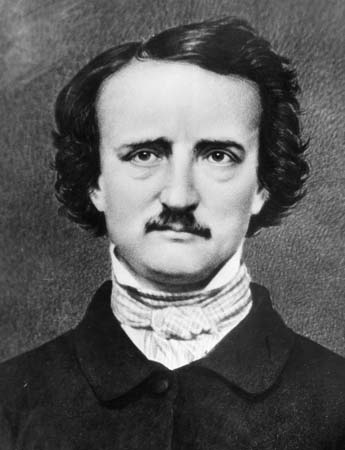
Edgar Allen Poe and a writer named Icess

The delightful Mr. Poe, never more. 

Today is Edgar Allen Poe’s birthday. 

I’ve celebrated his life on this blog before. Poe for me will always be one of my first teachers in the craft of writing. And, looking back to the humble beginnings of my life, I’m surprised that I was able to gravitate to him.

I grew up in East Harris county in the 1980s and 1990s. Back then it was all suburbs. Perfect houses, manicured laws, shaped trees, quiet stillness, devoid of culture. At that time there were no bookstores. Even now, the area has shopping centers and even a Starbucks but no bookstores.  For someone like me, who lived from books, escaped to them, it was difficult to find books to own. (Unless you took them from the library but that’s something else entirely.)

Fiesta Supermarkets and eventually Sam’s Club sold books in the area. The books at Fiesta were the small, fit in your hand, condensed version of the great books. This was how I was introduced to Edgar Allen Poe.

I read A Tell-Tale Heart in the same speed as a thirty man would drink a Big Gulp. By the last page, I thought that whoever wrote the book was a genius. The tick-tocking under the floorboard? The guilt? Fantastic. This may have been what jump started my imagination.

Later on, as I grew up and read more Poe and learned of his life, I learned we were both born in Boston. We both were dark. We both love deeply.

Now, as an adult, I see more similarities. How, because we love deeply we mourn deeply. How we are both tormented by our demons (though I think I deal with the better than he did.) How our lives bleed onto the page.

Without knowing it, he taught me how to be a writer both on and off the page, through his mistakes he became a tale of caution. Through his successes he modeled for me the simplicity of story telling and that the root of a story is simple — envy, greed, death.

So Happy Birthday and I hope someone shows up with a rose this year.