Dear English teachers: More bad spellers on the way.

Here’s an interesting article from the Associated Press via Yahoo News:

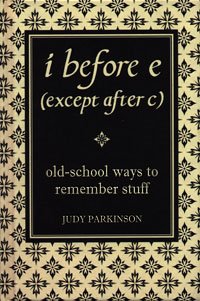
LONDON – It’s a spelling mantra that generations of schoolchildren have learned — “i before e, except after c.”

But new British government guidance tells teachers not to pass on the rule to students, because there are too many exceptions.

The “Support For Spelling” document, which is being sent to thousands of primary schools, says the rule “is not worth teaching” because it doesn’t account for words like ‘sufficient,’ ‘veil’ and ‘their.’

Jack Bovill of the Spelling Society, which advocates simplified spelling, said Saturday he agreed with the decision.

But supporters say the ditty has value because it is one of the few language rules that most people remember.

Happy Father’s Day

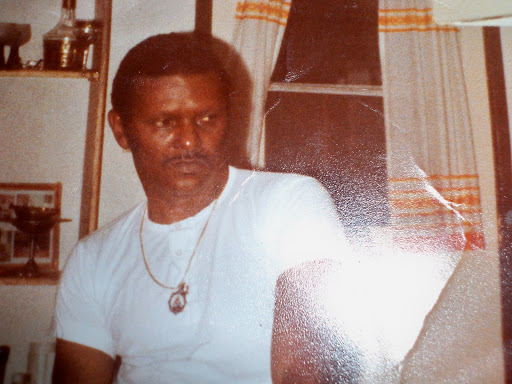
My dad died in 2002.

So father’s day isn’t exactly the easiest holiday for me. Definately easier than Christmas or Halloween or his birthday.

While everyone in the free world shopped for cards and presents, I didn’t. There’ll be no dad day dinners or brunches. Just me, in the quiet, working on my art.

But I did want to honor my dad. He was a man of strength and I get some of my can do attitude from my dad. He never believed that money should be a limitation to what you wanted to do in life. He said you can always find money to do stuff, you just have to look for it. And I find that to be true. There is a way, it may not be apparent at first, but do what you want to do in life. It’s so short.

He also supported my writing habit and was so proud when I came home with a copy of the high school paper. He saved every one of them. He was so proud.

So I wanted to share a short I wrote about my dad and the moment he knew he was leaving Cuba. I wrote it over six years ago and read it a week after his funeral at an event for Cuban Artists in Houston, Tx. It was the first time I had written anything about the Cuban experience and looking at it now, I want to take a red pen to it. But I can’t. There are just some pieces that need to stay as they are. This is one of them. Enjoy.

Dad’s Symphony

The wood handled machete masterfully swung from left to right as if
conducting an unheard symphony. The mid day sunlight bounced off the ocean
and reflected on to the large knife blinding its owner. The fields were
eerily quiet with only the sounds of stubborn sugar cane to break the
stillness. His hands, a template of unhealed and raw wounds, saw the rise
and fall of his family. Those hands have done so much but have so much
left to do. They have built for the family, they have stolen for the
family, and above all, they have provided for a fatherless family of
eight. Now those hands are Cuba’s hands whether he wants it or not.

No one said a word that day but he knew everyone was thinking it.
Guzano. He’s a guzano. Some looked upon him like rotting flesh
basking in the middle of the tattered pebbled street during a heat wave.
Others looked at him with pride and smiled when he walked down the street.
And still others looked at him like a mechivous child, unable to deal with the
reality that he knew something they didn’t know. Mothers would grab their
children, protecting them from the invisible, contagious and apparently horrid
disease that this man seemed to have. It wasn’t confirmed nor denied by
the government, however, he was under social quarantine. To talk to him
was like signing a death warrant but to ignore him would be diminishing
hope.

Now this man, an ironic mixture of life, liberty and the pursuit of
happiness, started out his day in the sugar cane fields when he found out his
status. The merciless sun was beating down on his brown skin, cooking it
and utilmatley burning it with so much fierce and brute energy that could not be
contained, erased, or corrected in any form. He turned to his left
and faced the fickle ocean. Would it grant him his wish? Or would it
deny him his human right and punish him for wanting more.

After a hard days work, Osiris Ferrer Fernandez walked home in the cloudy
weather. The sun had realized that his human guinea pig was a
guzano. He laid down on the cool white linen sheets and closed his
eyes. He was half-asleep when the truck drove down the street, booming its
horn. It was the truck of hope whose horn echoed through the olden Spanish
streets of Cuba. To Osiris, it was the truck of liberty, telling everyone
of his freedom.

“Osiris se va. Guzano. Osiris se va, lunes. Guzano.
Guzano.”

His eyes opened and he rushed to the door and outside to the street.
Finally, everyone knew what he knew. Mothers on the door stoops that were
braiding their daughter’s hair watched him drop to his knees, look up and raise
his hands to the sky. And on that tropical island the rain began to fall.
Osiris was the only man left on the street, welcoming the rain as it soothed his
sun burned skin and refreshed his hopes and dreams. His tears were
raindrops and his llantos, were thunderous rolls of joy echoing through San
Diego de Cuba.

Years after, Osiris Ferrer Fernandez, Cuban guzano became Osiris Fernandez,
US citizen. Father of four, husband of one, and eternally
remembered.

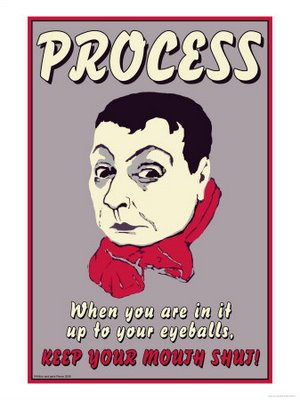
What’s the best part of the creative process?

From art.com
I’m starting the second draft of the short story that will be posted here next month.
The bones are there, there meat is on them, all is well. Now we mold.
The best part of the process? Molding until your eyes bulge. So I’m keeping my mouth shut for a couple of days.

10 plus one questions with Estevan Vega

It’s finally here! Can you stand it? Our first guest on Writing to Insanity! Let me tell you more about Estevan Vega.

As a young boy, Estevan Vega never really felt interested in the written word.
Far more fascinating things like comic book superheroes and sketching
fantastical beings caught his eye. But in the fifth grade, writing short essays
for a standoffish teacher ignited a fire that is still burning. Using his
imaginative father as a springboard for ideas, Vega set out to write a full
manuscript. His dream to become a published author came forth when he was just15
years old, releasing his first literary creation, Servant of the Realm,to the
world, a story about a teenager who sees the future deaths of those he loves and
tries to change it. “There is something therapeutic and natural about breathing
life into the mundane, or finding escape through odd characters and strange
concepts,” says Vega.

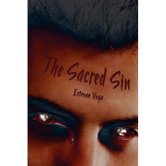
Vega’s newest release, The Scared Sin, is a dark who dunnit story. But I’ll let him explain it. Here is a Q&A with Estevan.

1) At a time when kids are concentrating on other things other than writing, what drove you to write a novel at 15?

I wanted to be cool, rich and famous. Looking back it kind of sounds ridiculous. I mean, that was a pretty cocky aspiration for an eleven year old to make. (That’s when I started writing.) But I was stubborn, and I had my mind made up. It was weird. I was really into drawing and sketching, and was actually descent at it. And then when I started getting A’s on writing assignments and my teacher began reading my stuff for the class, I was addicted. I was consumed with the notion that I had to be published and famous by age sixteen. I don’t know why it was sixteen, it just was. And Servant of the Realm came out when I was fifteen. Stubborn, punk-kid won.

2) Talking about age, you wrote on your blog that people tend to gravitate to the age when you wrote your first book. Does it ever get old to talk about such an accomplishment so early in life?

No, because if people are talking about my writing at all, I’m happy, even if they don’t have nice things to say (check out some Amazon comments for SOTR). I think a lot of people became attracted to my writing and gave it a shot out of pure curiosity, wondering what a fifteen year old kid could think was good writing, what he could conjure up and attempt to put out there. So, whether believer or skeptic, they usually picked it up and gave it a chance, which I’m grateful for. I think if my age comes up, it will give other, younger writers something to aspire to, you know? It’s possible, and they can do it, too, if they believe they can and stick with it.

3) What do you enjoy about writing? Walk us through your process.
I wouldn’t really say I have a process, per se. I usually get an idea, or disccuss one with my dad, then it stays in my head for months, or I write it down (which I don’t do often), and eventually it makes it to a sheet of paper, or stays floating in my mind’s cyberspace until the time when it wants to be written and when I can can write it.
My favorite part about writing is being able to be completely vulnerable without fear of what others might think. When you’re face to face with someone, you can’t always be honest with your feelings, emotions or beliefs. But behind a computer screen, in the subtext or dialog, you can be completely unashamed and vulnerable with the world, wear your heart on your sleeve and share your opinions with humanity. I love that, man.

4) You have two books under your belt, what have you learned about yourself as a writer through the years?

I still got a long ways to go before my work becomes a Great Gatsby or Catcher in the Rye. But someday.

5) Now you are in college. What are you studying? How do you fit writing into your college requirements?

Not very well. This past year, I often pushed aside other assignments and even social fun to edit the crap out of my next book Arson, being published later this fall. I can manage sometimes, but I kept getting so many rejection letters, that it was all I could think about. How can I make it better? What can I change that they didn’t like? It can really mess with your head and suck all your time up. But, I still did okay with classes, thank God. If I ever had to choose between writing and school, writing would win every time. Yet, paradoxically, if I didn’t go to school, I couldn’t be a better writer, so stuck I am.

6) Tell us about your latest venture, “The Sacred Sin”?
The Sacred Sin is a very dark story. The cover could tell you that at a glance. It’s a story about the darkness within all of us. We’ve got demons wrestling around us all the time, opposing forces seeking to bring us down or mess with our lives. But this story more deeply explores the darkness lurking inside of us, the person beneath our eyes, beneath our smiles and grimaces. It follows Jude Foster on a murder case that seems as unbelievable as him cheating death a year earlier. Each victim is engraved with a crooked crucifix, and there’s a blood-stained letter left behind by the serial killer at every crime scene. It’s up to Jude and his new partner to track down this sadistic madman…but they only have a week to do it.
7) The tag line to “The Sacred Sin” says: there is darkness inside us all. That’s an intriguing concept, most especially for a second novel. Why go down this road? What were some challenges that you faced writing this novel?

It wasn’t so much about what challenges I faced as a writer, but what challenges I faced as a human being. There are days when I look at us, human beings, and I marvel at how much we have achieved, what we are capable of, the good that we do to one another. It gives me hope. But I have also seen the evils we do to each other and to ourselves, and the darkness lurking underneath these hollow shells. There’s a constant war. I’ve never been one to shy away from what’s on my mind. Often times it upsets people, because I generally say exactly what I’m thinking, even if it makes them uncomfortable. As frail human beings, we struggle, we need help; but we try to end these wars on our own strength, and it’s often impossible. So that’s where The Sacred Sin begins, with a man at the end of his rope, consumed with cynicism, discontentment, and bitterness. He’s lonely and wounded and calloused, like so many others I have seen and met.
My books usually don’t just happen. I often look at what is opposing me, what is lurking underneath my eyes, behind my heart. The lust, the profane, the bitter, the murderer. Whether with our words or our deeds, we kill. When I write, it’s like I can see a storm raging in the distance, and it’s coming closer toward home and everything I know, and all I can do is try to warn everyone, even myself, if I’ll listen.

8) Both books—“Servant of the Realm” and “The Sacred Sin”—had detectives in them investigating something more sinister than the average crime. What about detectives and crime fascinates you and why use them as protagonists?

Growing up, I was really attracted to movies where a detective was on the search for something more than a criminal. Fallen and Se7en come to mind most vividly. Also, as I was coming up with concepts, I felt that the most natural way to investigate these mysterious occurrances I would be writing about is to have a detective as equally perplexed as I would be. I have also been very intrigued with the supernatural, that which cannot be neatly wrapped in a ribbon and sold with an explanation. I love incorporating the spiritual and the natural, perhaps one and the same, into my stories. It helps also keep it interesting for me telling the story.

9) Have you done any research for your characters, i.e. shadowing a detective?

You know, that would have been very fun and interesting, but no. I relied strictly on my imagination for these books. I mean, I researched a little, but Jude doesn’t always follow procedure, so I felt I didn’t have to be completely accurate. After all, the story’s about a demonic serial killer, so if people could suspend their disbelief for that, I hoped they could indulge an eighteen year old’s imagination on how things might go down with a renegade cop and a ghost killer.

10) You’re working on your third novel, A Boy Called Arson. How is it going? What can you tell us about it so far?

Sweet. Yeah, I’ve been working on that thing since the fall of 2006. I got the idea while visiting a college during my senior year. I was listening to a really cool song by the band Anberlin at the time, and I created Arson. Oh, by the way, I shortened the title to just Arson. It’s my most intimate and personal story. In short, it’s about a teenager who has the ability to create and manipulate fire during moments of fear and rage, and the strange girl who moves in next door, a girl who’d rather hide behind a hideous mask than to show the world, and Arson, what her face really looks like. There’s a lot more cool stuff, but I don’t want to give too much away.
I got a contract in April, and I’ll be working on it this summer with a new publisher. I’m stoked. Hopefully, Arson will be lighting up shelves later this fall.

11) Here’s your chance: Give us a spiel on why we should buy your book.

The Sacred Sin is really for anyone who wants to be a little creeped out, a little challenged, and a lot entertained. It’s very fast-paced, and the chapters are short, so you feel like you accomplished a lot if you’ve read a chapter or two. But seriously, it’s not the best thing out there, but it’s a really fun story, and it will keep you guessing until the end.
Well, there you have it! Some thoughtful insights to a young with author. I want to thank Estevan for joining us today and for answering our questions.

And if you want to continue following the tour, his next stop is tomorrow at Lara Rios’ blog at
http://juliaamante.blogspot.com/

To buy his book clck here:

The basic structure of storytelling–goal, motivation, conflict

My first creative writing class ever showed me a couple of tricks to better storytelling.

The best lesson: goal, motivation, conflict charts rock!

I usually don’t give a lot of tips on technique here since I believe that real writers like those who are published and win Pulitzers and such, should give them out. But a friend of mine told me recently that I knew a lot already about what I’m doing since I’m always reading or writing or practicing different techniques.

But what to talk about? I could talk about how to structure a scene, what dialog should do, and a Hero’s journey, all WONDERFUL things to know when you’re learning the basics of story telling. But a GMC chart is step one and helps you avoid problems before they start.

Okay, the basic premise is that your character, which ever it is, has internal and external goals, motivations, and conflicts.

The goals are what they want to achieve. It could be physical like losing weight or intangible like the love of a good woman. The point is that every character good guy or villain wants something.

The motivation is the why. This is interesting and involves almost digging into the psyche. Why does your character want to lose weight? Perhaps an external motivation is that they want to look good naked. The internal is that they don’t want to be laughed at or want to catch the eye of a potential sweetheart (can’t you tell I’m a chick lit writer. ha!) This motive drives the character and your story.

A trick that I’ve learned with goal and motivation is to make the over all theme relateable to everyone. Everyone (most of us anyway) can relate to losing weight and wanting to feel good about ourselves.

The final is conflict and this is where you get to throw the book at the character. So that character who wants to lose weight to feel good about themselves and catch their sweetheart’s eye has a conflict. In this case let’s say his external conflict is that he works at Krispy Kreme as the new flavor taster. His internal conflict is his self doubt. Now we’re cooking with fire! What a conflict and what a struggle! Makes for interesting reading, I’m sure.

Now do this with all your characters, villains too. And it’ll help you avoid trying to plug in whole later. Trust me on that! The story I just finished had everything except an internal motivation and my critiquers caught that lasp quickly! Even though when I revised it, I know something was missing, I couldn’t put my finger on it. I didn’t use this technique. So you see, even people who use it often need to continue using it.

Make your own chart and see how things begin to flow. Happy writing!

Somedays I do more writing before 10 am.

Today was one of those days when things just wash over you. It’s the best part about being a writer. That’s when the writing does it self…kinda.
After having some jolting (in a good way) experiences before 10 am this morning. I thought I would share.

Crazy-ass characters
I hadn’t thought about a story I started in January since, well, January. It was beginning of a series with new sleuths and what not. I started writing their story on a plane ride home and it was difficult. The prose didn’t flow as freely. I let it go and decided that one day, I’d come back to it.

Remember when I wrote about how characters have their own lives and the jump into yours? Like when they start talking to you. You know you’re not crazy but it ain’t normal either.

Well those two characters started talking to me … in the shower. Other writers know what I mean. It’s the craziest, spookest thing that happens. They just pop into your head and they tell you everything–who they are, their accents, what they’re about, etc.

I don’t know why Ella “Sugar” Montgomery and Janice Brown decided to talk to me today instead of back in January but I’m glad they did. Those are some crazy ladies. Can’t wait to talk to them.

Okay, but talking I mean getting their character down. I do this character interview thing which helps me work out bugs. I mean, I’m a reporter by trade. Might as well use those skills.

By interviewing them I can also learn about what drives them and how they relate to each other. I may just do a goal, motivation, conflict chart. More on that later.

Future Writers of America, i.e. the untainted writers

So the reason I was up so early, wasn’t to channel my two characters but to cover an assignment for work. The gig was about a new program at the local university that teaches kids going to third grade to read.

In the course of my job, I’ve covered several of these kinds of programs. These types of stories, along with festival/event type stories, I can do almost in my sleep. After more than six years of doing the same thing over again it comes natural, I guess.

After I did my interviews, the teachers settled the kids down for some journal work. The process: write a prompt on the board and scribble for 10 minutes.

I LOVED THAT EXERCISE IN SCHOOL. Just adored it.

Watching the kids do their thing, it made me happy and stirred some deep emotions in me. See, these kids are not reading on grade level and are behind. One child in particular, a lanky, knobby kneed, bad hair havin’, little girl who loved to socialize, had trouble reading and only wrote for 5 of the ten minutes. That little girl reminded me of … me.

She was a bit awkward but loved to smile. She was me during the beginning part of my life. See, I had trouble reading growing up. My teachers thought I was slow. But my mom told them different. She said I wasn’t slow, that I was very smart. My mother, who barely knew English herself, would sit me down on the hammock in the backyard, and make me read to her. This happened nearly everyday after school.
I owe my writing career to my mother.
If it wasn’t for her insistence on me reading, there would be no way that I would be able to write a sentence, much less be a journalist and writer. She’s the reason for my life. She’s the reason I can aim high.
On my way out, a little boy said he liked to write. I told him I was a writer for a newspaper.
“I write everyday.”
He nodded.
“But there are other things you can do as a writer. Do you like watching TV?”
He nodded again.
“Well, you can write television shows and movies.”
He smiled and I walked away.
It’s not my mom in a hammock but it was the best I could do for now in the paying it forward category.