On being (Afro) Latina in the South

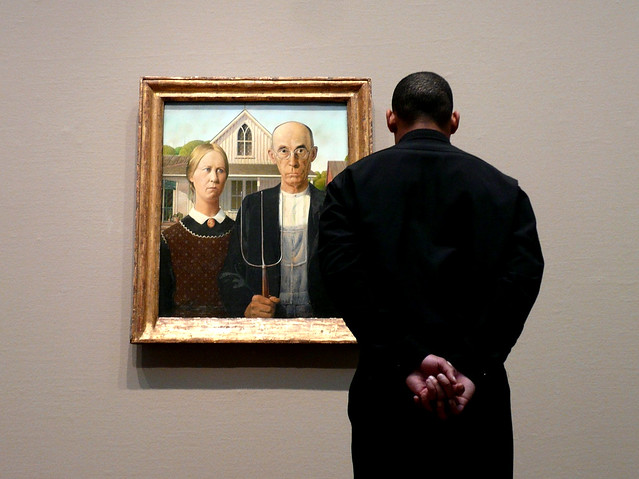
Photo by: a untrained eye, Creative Commons.

In a world full of fried chicken and cornbread, it’s hard to be lechon and black beans.

 
Yes, I used a food reference to compare being Latina in the South. It was the only way I could think to communicate how its like to be in a place like northern Louisiana when you’re more like a Caribbean sunset.
 
There I go again. Let me explain before the metaphors take over.
 
My longtime blog readers know two things about me (among several). One, I am Latina though I don’t write about it as often as I would like. Two, I live in the South. I like living here though it is difficult being different in a land of relative sameness. I love that it’s 80 degrees today and in Washington D.C., where I will be tonight, it will be in the lower 60s.
 
But rarely do I write about both. I figured it would be better to stick to being a writer and a writing blogger. However, since I expanded the scope of this blog to include my writing life, this is fair game. You remember what I’ve said about truth and writing, right? 
 
Being Latina in the South ain’t an easy thing, home skillet.
 
While the Latino community is the fastest growing segment of the population, it isn’t growing everywhere in the South. In north Louisiana, there are Latinos. I see them in the grocery stories and at Wal Mart but not in large enough numbers to feel comfortable. Not like Houston though I know that’s not a far comparison. I have another. In Wichita, Kansas, the Latino population is growing. When I lived there, I was slightly more comfortable being Latina–I was part of the local MANA group, I had (have) Latina friends, and I had my favorite spot to go if I was a bit home sick.
 
The midwest and parts of the South are the new frontier of Latino growth. And by new I mean newer. That frontier was fresh-out-the-box new five years ago. But Shreveport is not Wichita, or Atlanta, or New Orleans or any other major southern or midwestern city where growth is measured by the new Mexican restaurant down the street. There are only three race/ethnic categories in North Louisiana: black, white, and everybody else. Where do I rank?
 
Now this is where it gets, for lack of a better word, interesting–the Afro part.  I am Afro Latina. That means my hair curls into a kink. My skin is dark. My lips are full. That means, when I walk out the door every day I have to make the transformation from Latina to black.
 
In the South, both new and old, I am a black woman. That means I  have inherited a past, a stereotype, and a point of view that is not my own.  My ancestors were never slaves in North America (Central and the Caribbean, yes) and I don’t always want to eat fried chicken (neither do black folks but the stereotype is still there).  That means I also have to work twice as hard to prove myself equal. When I am pulled over, I will always have to wonder was it because I did something wrong or because I am darker than the person pulling me over. There are parts of the area where I don’t travel to after dark.
 
These realities we not completely strange. There are part of Houston I don’t drive to at night. That’s simply because it’s dangerous. I did work twice as hard in Houston, yes. That’s because I had something to prove to myself, not because I wanted to disprove a stereotype. When I’m pulled over in Houston, I know why.  I’m not saying Houston is a utopia, far from it. It’s different, that’s all.
 
The stereotypes that I now live with were not things I dealt with when I thought I was colorless. These things are now my reality as an Afro Latina in the South.
 
It would be easier to just assume my role as a black woman and melt into the background. Yes, it would be easier but it would be lie. I am black and Latina. I can’t accept one and deny the other simply because others choose to put me in a context they understand or refused to expand beyond their personal borders.
 
So, I eat cornbread and fried chicken, which thankfully I like. I each smothered pork chops and red beans and rice like I’ve always had it. I melt in just enough until I come home and lose myself in a world of salsa music and novelas.  I adjust and readjust, constantly balancing between perception and reality.
 

A balancing act. This is what it’s like to be (Afro) Latina in the South.

Subscribe to this blog by email.

Latinas unite! Don’t panic over anxiety disorders

It started out with what I thought was a heart attack. I thought I was dying.

The day that happened, what I knew to be true changed. I relearned that I wasn’t invisible and I had face issues I didn’t even know I had.

That heart attack was a panic attack. In retrospect, a big one, only because I didn’t know what was happening. That’s when life became even more beautiful for me, the moment I experienced the fragility of humans. That was more than a year ago.

What I learned next was shocking. According to the National Institute of Mental Health, U.S.-born children of immigrants may have higher risk for mental disorders than their parents.

Whoa.

There’s not lots of research out there about mental illness and Latinos, much less info about Latinas and these disorders but there are researchers and psychiatrists talking to about this.

That means it’s time for a conversation.

My next project is to write a personal essay about my panic attacks, one that will hopefully find a home in a publication when its completed. My hope is to go on this journey of discovery about panic attacks and mental illness, education myself and other Latino/a, and create an online community around this issue.

In the Latino community, there is a stigma about mental illness. It’s explained away with simple phrases like “ataque de nervios” or attack of the nerves. Sometimes, it’s seen as weakness to go seek help for mental illness. Sometimes, it’s seen as a middle class problem for those with health insurance.

It shouldn’t be this way. This is real. It needs to be addressed.

So, I’m doing what I do best, which is write. Although it’s an essay, I’m using my journalism skills to research, interview, and write this piece. I just have a general thought right now, my research is in the fledgling stages but that’s okay. This is too important to rush.

Now, here is the best part of this journey. This is the part that is going to be amazing. As I go through the process of writing this piece, I will share what I find with you. I want us to become a community. I want us to share information and experiences. Here’s how I’m going to do it.

Through my Google+ page, I will share links and videos and blog posts. If you’re on Google+, circle me and I. Leave me a note on my page and I will include you in the circle I created. So everytime I post something, I will share it with the circle. We can build a community that way!

Through Facebook, I’ve started a group called Latinas and anxiety disorders. I will also post what I find there. It’s also a good place to start a conversation and to trade stories about anxiety disorders or other mental disorders.

The goal is to start a community, open a dialogue, and do this together!

I am excited about this.  I still have panic attacks but I manage them. With knowledge and community, we can help the next Latina or woman understand what is happening.

Owning your Latina-ness

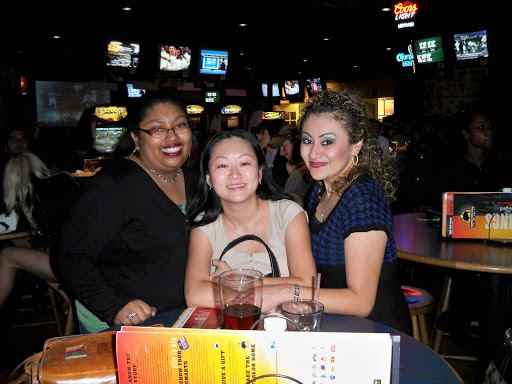
Me and my sorority sisters. We belong to a Latina sorority

I don’t write a lot about being Latina on this blog.  When it does appear, it’s in passing or it’s in conjunction with a decision I have made.  Personally, saying I’m Latina every five minutes does nothing for me.

My mantra is simple: I am one. It’s in my blood. We do we need to talk about the obvious.

I consider that owning your Latina-ness. When someone can be comfortable enough in their own skin to just exist that’s when you own what others may see as, well, a reason to be considered different. To quote a word I hate when it comes to the description of being Latina — “spicy”. (Like really? There are no other words to describe me and my fellow Latinas but spicy. How about intelligent? But I digress.)

So a fire storm erupted a couple of days ago.  A script reportedly based on Alisa Valdes Rodriguez’s NY Times bestseller “Dirty Girl Social Club” was leaked to the writer from a lower level employee at NBC who was considering it.  The author entered into an agreement with Ann Lopez from Encanto Productions for rights to produce the show but Luisa Leschin not Valdes wrote the script.

Valdes is not happy (putting it mildly) with the script and has said it’s the bastardization of her concept, most especially her characters who are Afro Latinas.

As an Afro Latina myself, sadly, I’m use to Hollywood and others in the business of images saying that I don’t exist because the American public can’t understand how a black girl can speak perfect Spanish.  And I can’t even get mad about it anymore because even media outlets that have marketed themselves as Latino publications do the same thing. Even our own Latino people don’t really understand how a person like me can exist. Usually when someone is asking me about my background, it’s the folks who are suppose to be my brown brothers and sisters.

But again, I digress.

So this is my point. Valdes’ book is her Latina-ness.  Regardless of what you think, Dirty Girls Social Club (DGSC) is the first book she wrote and sold and it’s the one she identifies with most.
And having someone take your Latina-ness from you and making it into something that goes against who you are to fit a stereotype is the horror of horror for writers and I deal with that in my writing everyday.

Cubans come in all colors. And so do Cuban writers. 

Yes, me — the Afro Latina herself — is super careful how she writes her characters who happen to be Latino.  I don’t want my readers to read a Spanish word and get an instant idea about how people behave and what they look like based on harbored stereotypes I had no hand in creating.  I want them to read the story because it is a story that’s worthy of consideration.

This is something that my grad school advisor and I work on all the time.  I hold back on all the italicized Spanish words and images and think about the story first.  How will italicizing Papa or Mama help my story? How will it aid in characterization? Will it make it a better experience for the reader?  Should I even  italicize them? These are the questions that are only answered by me, the writer.  No one can or should answer them for me.  That’s because at the core of the answers to this and other questions like them is my Latina-ness.  I own my Latina-ness. No one else does.

And that is the issue here with Valdes and the DGSC script.  In addition to all the other issues,  the big one, the one that probably stings the most is that they stole her Latina-ness.  And that is unforgivable. It’s like stealing someone’s soul and no one has that right.  What’s more unforgivable is that it was another Latina who did it.

Which reminds me about the story about a bucket of crabs…but that’s another post for another day.

Here’s the latest.

Powerful Latinaness

Okay, after my depression and Latinas post, I thought we (and by we I mean me) needed a pick me up.

So I am going to feature two Latinas who I admire for doing what they love to do and doing it well.
First up Selma Hayek.

Okay besides being INCREDIBLY beautiful. She’s smart. INCREDIBLY smart. Homegirl started VentenaRosa, a production company that has done several movies including Frida and an adaptation of No one Writes to the Colonel, from Garcia-Marquez. The company also produces a well known, primetime one hour dramady. Maybe you’ve heard of it?
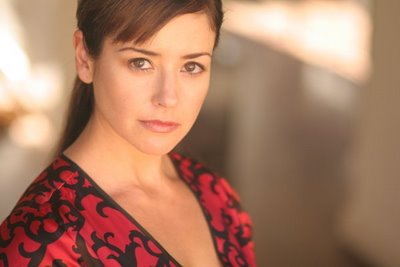
Not only did she do that but she’s got another company, VentanaAzul, which is a partnership with MGM to produce more Latino themed work.

Let’s not forget that homegirl married rich and now has the most adorable daughter, Valentina.

I left a bunch of stuff out–working in novelas, awesome movies, etc, etc.

I’m becoming a fan of hers for her work toward making art that gives Latinos a voice in a town that would soon keep us in the shadows. Do your thing, mamita!

Next chica: Ruth Livier

You may recognize homegirl from Resurrection Blvd. Well ,now she’s doing her own thing, a web series called Ylse. “Think illegal and sexy.” EEEl-say.

Of course the story line is near and dear to my heart. Ylse is a young reporter working as an anchor to one the Spanish television shows — think El Gordo y La Flaca.

She’s idealistic and wants so very much to voice her own opinion but can’t. The show is about her journey of finding her voice, all while she’s channeling Oprah.

I saw the first episode on Generation N and loved it. I quickly did a Google search for more (and you know how good I am with my Google searches). I found episodes 2-6 on Youtube.

The series is brilliant and it gives me hope that our stories will be told. That we won’t be relegated to sex symbols, maids, or delinquents any more. Well, at least less so.

This web series has also inspired me to develop some ideas in my head. And y’all know I got ’em. I guess it’s that sense of empowerment that makes me flock to Ylse. We don’t need permission. Excuses no longer exist. We can create and rewrite our destinies as we see it.

Here’s the first Ylse webisode.

Latina and depressed

Today, I felt depressed. Like eating chocolate ice cream, watching Love Story on repeat depressed. Mostly because I missed my friends and family terribly.

But apparently, I’m suppose to feel that way, according to some quick Google research I did.

If you are Latina, your chances of being depressed are increased. Most especially if you’re educated, acculturated and U.S. born. Don’t believe me? Check out these stats from
NAMI Multicultural & International Outreach Center in Arlington, VA:

  • Latinos are identified as a high-risk group for depression, anxiety, and substance
    abuse.1
  • Deborah Duran established correlation between acculturation and depression (Duran,
    1995)
  • Prevalence of depression is higher in Latino women (46%) than Latino men
    (19.6%).
  • The Common Wealth Fund Survey revealed that surveyed Latino and Asian
    American girls exhibited more depressive symptoms than the African American or
    white girls.
  • Among female high-school students in 1997, the rate of attempted suicide among
    Latino girls (14.9%) was one-and-a-half times that of African American (9.0%)
    and non-Hispanic white (10.3%) girls.
  • Close to one out of every three Latino female (30.3%) high-school students in
    1997 had seriously considered committing suicide.
  • There are higher rates of mental illness among U.S. born and long-term residents than
    among recent Latino immigrants.
  • Place of birth has a significant correlation with the subsequent risk for most
    psychiatric disorders.

A lot of these facts make so much sense to me. I’m not ashamed to say it but there was a time in my life where I did contemplate suicide. Most people would consider that an uber personal detail and not something that’s meant to be in a blog for the world to see. But I’m not trying to hide it at all. I tell everyone about that, most especially people who are saddened for some reason.

It was after my dad died and I moved to Corpus Christi. Looking back now, it might not have been the right time to move. He died in October. I left in March. I dealt with the loss of not only my father but also of my way of life.

I wanted to kill myself. The pain was too much to bare. I wanted to drive into the ocean to be with my dad.

But I’m alive because I’m Latina. True to form, as is true with most of us, I worried about others before me. How my mother would continue living burying a husband and a daughter in the same year. That kept me alive. That and the power of prayer.

Bottomline: Sucks to Latina sometimes. Granted that we are awesome and wonderful beings. We come in all shades and cultures, we’re stronger than we give our own selves credit for, and we’re powerful writers, bloggers, executives, etc. But sometimes, just sometimes, it’s all just too much.

And now I have an inkling about why.

Latina

by Icess Fernandez Rojas

From the pelos necios on my head,
To the tamales I have for feet,
I am Latina.

Confused as you maybe for me
Not being a hot mommy chula,
These carmel curves and supple brown skin
Speak a romantic language that you want to be included in.

Like when I roll my “r”
Like a racy red roadster ready to run.

Or when I move my hips
swish, sway swoosh.
Are you ready?
Can you recognize?

Don’t be fooled by street corner imitations.
Watered down, assembly line, temporary fascinations.
‘Cause I’m not made to order,
And you, can’t have it your way.

Real Latinas have curves,
Top, bottom, side to side that make you want to ride
And not get off.

Or maybe you do, if you recognize but word to the wise,
The contours of her lips do more than kiss
They inspire greatness and aspire to be
More than what you usually see.

Brown and proud?
No. Latina and proud.
No need for a revolution,
Just a quiet solution to what I’m about to say.
Now listen closely.

From the pelos necios on my head
To the almond shape of my eyes
You cannot deny…I am Latina

"Latina" has won people over

For about ten minutes I was frustrated at myself.

What goes after swish, sway, swoosh?

After being away from the spoken word stage since…late July of 2007 (disappointing shake of the head) I went back up on the stage tonight and I KILLED IT!

I attended the Write On Stage Reading and Spoken Word event in Shreveport. It was a free event and I wanted to see what was going on in the poetry scene here. It was a great experience and I enjoyed it.

And of course, there was an open mic portion. So I texted my homeboy S to get his take on it.

“Step up. U’ll be different and a hit. Watch”

So during the first couple of poets, I strained to remember Latina, my signature. I have it committed to memory but since I hadn’t used it in a minute, I was petrified when I couldn’t recall a couple of lines as I was saying it to myself.

But eventually, it came back, and so did the cold feet and the dry mouth. Sorta. I got the cold feet once I was on stage and the dry mouth right before. The nerves came when I sat down. And of course, as what happens with nearly EVERY performance, the minute I start the poem, I blackout and don’t remember what I did. I remember saying hello, the start, and then I remember getting off stage.

Oh but the people loved it! And I got so many compliments. They were feeling me. And it felt good to be back on stage. Will I be going back to poetry? Not sure. But it’s nice to know I can go back to it if need be.