I’m interviewing Donnie Wahlberg tomorrow. HELP!

So it’s finally happening.

But before I tell you what “it” is, let me preference this by saying … this ain’t a post about writing.
I could find a writing link or somehow explain how “it” pertains to writing but I’m not gonna lie. Why lie?
So here’s the “it”.
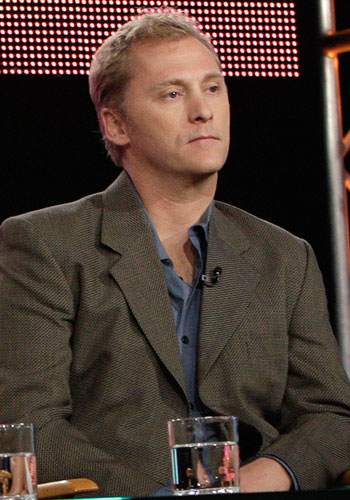
I get to interview Donnie Wahlberg from New Kids on The Block tomorrow.
Yeah, I know. How am I able to keep still? Considering that I tweet this man daily and just adore him, how can I be calm enough to write this tweet. Well, blame it to the seven years of reporting — professional all the way ( and by the way tomorrow is also my seven year anniversary of being a newspaper reporter. Woot.)
I’ve been wanting to interview him since before I knew what interviewing was. Back when I was a little Blockhead (NKOTB fans are named as such) I wanted to either sing with them or ask them a bunch of questions. And now it’s happening. In the same week I interviewed another celebrity who I’ve wanted to ask a bunch of questions too — Jeff Goldblum. This is really one of my dreams come true. I wish, however, that I could get the full hour with him but, alas, in life you have to sometimes take what you can get. So I’m taking this and running with it.
How do I get to do this? Well, as we all know, I have a great relationship with the USA Network and I’ve gotten to interview some pretty cool people as well as help promote their awesome shows.
Donnie will be on In Plain Sight, 10/9 central March 31. The interview, or conference call, is really in relation to that.
So I get two questions — a main question and a follow up. I have one question, what should be the other one? In the comment section of this post please write what I should ask.
PLEASE keep it professional. This is, afterall, a professional interview and I do want to be invited back to others so I will NOT ask him the following:
Will you marry me?
Can I get a twug/hump/follow?
Such and such said (fill in the blank)
Can I get to tickets to any show?
When are we moving to Utah?
Is tonight going to be a new Back Rub?
I’m also going to ask another favor: Will those that he follows send him a DM on twitter to let him know I will be on the call. Because I only have such a short time with him, I want him to feel comfortable with me and to know that a BH is asking questions. On twitter I’m @writin2insanity

I’ll also be tweeting out the conference call as per usual. The BH version of my review of In Plain Sight will run here tomorrow. The show fan version will be on The Character Playground
Also don’t forget: The Character Playground and NK Airplay present: In Plain Sight Chat-Donnie edition. This will be a BH only chat during the show next week. Addresses will be coming soon.
Okay, go to it.

Going back to basics

A typerwriter. Pre-computer.

Part of an MFA program, I believe, is the joy of the journey.

Talk to any MFA-er, especially those in my program, and what they will say is that they enjoy their work. That will quickly be followed up with the OMG-I-have-so-much-work face.
I’m serious. It’s an incredible amount of work.
But here’s the thing about incredible amounts of work, eventually you learn something about yourself. For me, is that I actually enjoy writing…again.
Of course me the writer of a writing blog would say that. What I should say is that I enjoy the challenge. The reading fuels the writing and it’s a chance to try on techniques like trying on clothes. What fits? What feels right? What should be left on the hanger? It’s all part of the journey and that’s what it’s all about in the end.
Part of the journey is figuring out what kind of writer you are. What works best for you. So I’m going to take my writing back to basics. Besides reading like a librarian on a deadline, I’m also going to write like other great writers learned to do so — paper and pen.
I guess if I REALLY wanted to go back to basics, I’d use a chisel and stone but I digress.
This is truly insanity. Writing original stories with paper and pen with a packet of work due to my advisor every three weeks. Yowza!
Part of the process of writing is feeling connected to the work, crafting, revision. Though all this can be done with modern tools like a computer, it’s not necessary. Hemingway didn’t write with a laptop. Fitzgerald didn’t craft The Great Gatsby at Starbucks. Garcia Marquez didn’t use internet for research.
Lately, I’m finding the computer distracting. Twitter can be accessed on my laptop with one click. Facebook too. And any place worth their salt has wireless access. It seems like there is every distraction to NOT write and with the MFA schedule, that’s not an option.
So I’ve decided to use paper and pen for the first draft. Then move to that funky looking machine at the top of this post. That is a typewriter and it uses ribbon and ink to put letters on the page. Remember those? And yes, I owe the one in the picture. Actually, I own two. The second one is not electric.
The final draft will be on the computer. Each story will have a minimum of three drafts. Knowing myself there will be more.
But, it’s not about drafting; it’s about being close to the words, avoiding the numbness one gets sometimes. Like a blacksmith works metals, so to will I work the words for my craft. After all, this is MY work, and I have to freedom to do what I need to get the results I want.
Then again, this can all just be silly and I’ll return to my procrastination station and to Twitter, my adored social networking site.
We’ll see how this goes.

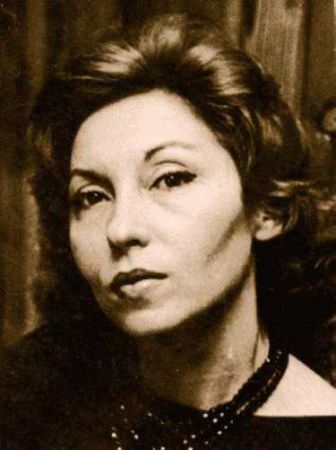
Clarice Lispector: my new Muse/teacher

She’s gorgeous isn’t she? Is she model? An actress? A singer? Rich and famous?
She’s a writer. Her name is Clarice Lispector and she is a new Muse.
At this rate I’m collecting Muses like I’m collecting cans. But I digress.
I had to read Soulstorm:Stories, Lispector’s collection of shorts. Well, it’s two collections in one book but … more digression.
She’s amazing. She’s inspiring and I’m sad that I discovered her during grad school. The reading pace is so rapid that I really have one week to read each book. Soulstorm is the type of book you really should read in a couple of weeks to really begin to understand her technique. But alas, I have to annotate and write a five page critical paper on Soulstorm and read two more books so I can’t really relish in her writing as much as I’d like.
I’m finding, however, that she is inspiring and has done something that no other writer has gotten me to do…write in third person. *Gasp* I know. Me in third person is like Katherine Heigl as a burnette. Oh wait…
Ok, third person. Gotcha.

It’ll be interesting to see how this turns out.

RIP Alisa Stingley

She was hard on her reporters because she knew they could do better.

Even the seasoned ones could do better. Alisa Stingley was from that old school reporting way that you now only see in movies or hear the veterans talk about when something goes wrong. “When I was a cub reporter…”

But here she was, in the middle of a newsroom full of green reporters deep into their second job, or reporters like me … just wanting to report and find a newsroom to call home. She was there like a testimony, unyielding and a beacon to what this business truly is…the telling of a good story.

Alisa, bless her heart, passed this morning.

I had wondered about the Alisa outside of work. Call me an old softy or a reporter who always wanted to know the why, but I wondered about her life. Where did she work before? How did she get into this business? What was she like as a cub reporter? What did she do for fun? Has she ever fallen in love? That last question was more the writer Icess than the reporter Icess.

I never asked these questions because, well, I didn’t want to cross that line. You know, THAT line between employee and manager. It was a professional setting after all and those weren’t very professional questions. Besides, she was busy grooming me. But I didn’t know that at the time.

We were the polar opposites. She’d get to work at 8 a.m. sharp nearly every morning. I was more lassiez faire about my time and let the workload dictate my start time (I work better later than earlier). She was very by the book–ask the hard question, I was very lets-find-the-answer-somewhere-else. She was very strict, asks lots of questions, and edited that way. I was very artsy…cause, you know, I’m me.

But somehow, through all the differences we were able to get along for the most part. We had our disputes but we worked them out one way or another.

We also had our glory moments:

  • When I got into grad school, she was excited for me. Later, she’d say she was tickled. She bought a King’s Cake into the newsroom and we celebrated.
  • When I got sick. So sick that I was doubled over in pain, she worried about me. She’d send me home when I looked too uncomfortable, would understand if I couldn’t make it to work.
  • When I wanted to write a narrative story, she was there cheering me on. She said, ‘write the story like you would a fiction story’. And I did. The next day, I had a note from her telling me how well I did.
  • When she was sick and had to be on temporary disability, she’d email me and other members of my team updates on her condition. She was also giving us gentle suggestions on story ideas.

Alisa was one person with many sides and many characteristics and lots to teach. See, I didn’t need to know how she was like as a cub reporter or how she got into this business. That’s all back story, holes I can fill in later, questions I can ask from secondary sources. The story, the REAL story was who she became, who she was beyond the tough exterior, and why she was so hard on her reporters. Relentless.

She was hard on her reporters cause she thought they could do better. She was tough on me because she KNEW I could do better. She saw in me what I didn’t see in myself, the potential to grow out of my pot, where I’d been seeded, and to be put into the ground where I could flourish.

Thank you, Alisa. Que en paz descanses

Starts with an idea: Jeff Eastin talks writing

So we all know that my BFF with the USA Network hooks me up with conference calls with network stars, producers, writers, etc… Yes, we all know this.

And to my BFF I’m VERY grateful because some of the lessons about writing have been the best ones ever. Learning to write anything and everything, including tv scripts, is almost a full time job in its self so it’s great to have teachers helping you out.

Today’s teacher: Jeff Eastin, creator of White Collar. (Season Finale March 9, 10/9 central on USA )

He’s just hella cool and laid back and smart. Uber smart.

As I’ve been doing recently, I ask two questions during these calls, one for my USA Fan related website and one writing related question for this site. Jeff’s writing related was amazing.

Question: Take us into the writer’s room. How do you come up with the crimes? Acting out, draw them out?

He said it starts with an idea. And they come from everywhere. He has his Google feed aimed for articles about white collar crimes. (Yes, ripped from the headlines and WHY didn’t I think of that?)

But the writers on the show also challenge themselves. For example, the episode Bad Judgement is about a home mortagage scam. Originally, the episode was suppose to be about a bank hiest but production had to change. So the writers took the most boring type of white collar crime and make it interesting.

But the most useful piece of insight Jeff mentioned was about scenes. He usually wants to see certain scenes in the episode. So if there was a scene he wanted to see, the writers would work backwards from it. Suddenly there is a plot and an episode evolving in front of them.

“There is not a direct line from start to finish,” he said.

So how does this translate to novel writing? In a couple of ways.

First of all let’s get past all the fru-fru, high brow, novel art stuff. Love it as much as the next guy but I’m about becoming a master storyteller. So, all that aside, what we have here is the modern-day Margaret Mitchell school of storytelling. She wrote Gone With the Wind in scenes between four main characters. And then, poof, a novel.

I submit that when writers get ideas, they also get scene ideas. “Wouldn’t it be great if THIS happened?” or “How great would it be if this character did this at the end?”

Through this technique, the scene or the action is driving the novel, what it will become. It’s evolution is determined by working backwards and fowards and sideways. It would be a HUGE mess…until it wasn’t it.

This technique is similar to one a newspaper editor told me about. To write the nut graph (equal to a main scene) first, let the rest flow to the end, and THEN come back and write the beginning. It’s a perfect device for beginning journalists who haven’t mastered writing the lede. It also works well for being novelists as well if there is a particular scene that doesn’t leave them alone.

Scene are what readers and viewers remember. Like when Catherine Earnshaw returns for Heathcliff or when Neal jumps out of the judge’s chambers office widow, or when Rhett Butler kisses Scarlett before a night of passion — all of these are memorable moments which gives not only gives validity to Eastin’s comments but makes me wonder… why aren’t all stories written like this.

So as I approach me masters thesis, I’ll apply this technique and see where it takes me. Who knows, it may enter into my craft box and I’ll be able to say Jeff Eastin taught me how to develop a story.

Thanks, Jeff!

My semester reading list

Yes I KNOW that I haven’t blogged about my first graduate school residency and how transformative it was. I promise that pictures and a video exist but I wanted to give y’all a list of what I’ll be reading this semester.

(Oh if you don’t know, I’m an MFA student in creative writing at Goddard College. Sweet! )

Just finished the first book Tadeusz Borowski’s This Way for the Gas, Ladies and Gentlemen. More on THAT in another post. Gotta do the annotation for that first.

.gr_grid_container { /* customize grid container div here. eg: width: 500px; */ } .gr_grid_book_container { /* customize book cover container div here */ float: left; width: 98px; height: 160px; padding: 0px 0px; overflow: hidden; }

An education before an education or graditude to a legend


There was NO WAY I was gonna miss this interview!

As we all know, I’m a reporter. Seems like I’ve been reporting, in one way or another, all of my life. I’ve interviewed politicians, school teachers, a couple of celebrities (Jewel was a surprise) and each time I try to do my homework on them. I want them to walk away knowing that I respected them and their work enough to know that I wanted to ask thoughtful questions.

As a blogger and having some awesome BFFs associated with the USA Network (favorite one EVER) I’ve gotten to ask questions from some pretty cool peeps, including James Roday, Dule Hill, Matt Bomer, Tim DeKay, and of course the show creators or what I like to call the trinity — Franks, Nix, and Eastin.

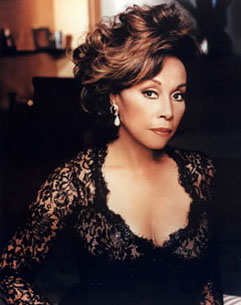
But when I got a chance to ask Diahann Caroll, — legendary and inspiring actress–a couple of questions…well, I was kinda floored. (Mrs. Caroll is on the hit show White Collar on Tuesdays 10/9 central)

And nervous. Oh so nervous! See, the interview was on the same day I would be traveling to Dallas to fly to my graduate program (more on that later). So not only did I have to finish all my work work but also find intelligant questions to ask a legend in the ten minutes of off time I had.

Yeah. Such is my life.

Oh but it was all worth it. Mrs. Caroll is amazing, sweet, and patient. And she answered my questions –one of which is about actors and scripts. To read the entire transcript, click here.

So my writing question was:

What do you look for in a script that helps you identify with your character?

The answer is cardinal. She said is it was something undescribable. Something intangible that makes her want to take the role. Something in the writing that makes her want to say those words.

That later part — makes her want to say those words — is the most important part of the entire conversation. As a writer, it’s important to keep readers (actors in this case) interested. And it should be seamless. It should be something almost instinctual. Something that just makes you want to say those words out loud.

Mrs. Carroll calls it instinctual, emotional, a kinship, that feeling that an actor gets when they are reading a part. It jumps out at you and makes you want people to understand the character.

Good writing, GREAT writing should make you feel that. Even though a character maybe evil or bad due to or inspite of their circumstances, the reader should feel ownership of them. They should have a gut reaction. The character should move the reader.

What a perfect education for a writer by a perfect teacher.

Needless to say the my MFA writing education started days earlier than scheduled. I wouldn’t have wanted it any other way.

Thank you, Mrs. Caroll.

Artists and art

A writer friend of mine has a signature on her email that says buying a book is buying art. As a writer, of course, I agree with her. But the thought, as all thought is, is deeper.

My definition of art is the epicenter of which creativity happens. It’s inspirational. It’s a building block to other art. Indeed, on of the main functions of art is to inspire other art and artists.

Let’s take an easy example. Michael Jackson. His art inspired other performers across different genre — Justin Timberlake to Usher. Paul McCartney to Brittany Spears. Their art is built on his art.

So does art belong to one person? Yes and no. Certainly when it’s being created and before it’s released to the world, it belong to it’s creator. It belongs in whole to the artist.

But it’s when the artist releases it’s creation to the world, unshielded by anonymity, that it becomes almost intellectual property.

This is what I’m not saying: Dont take someone’s art and put your name on it. That’s not art that’s stealing. And don’t create art and not give create to what inspired you. That’s just wrong and selfish. What I am saying is that once art is given to the world and it’s digested, heard, listened, read, and reflected on, its no longer the artist’s pet project or some file on a computer. Its experience and the trickle effect from it, belongs to the collective.

That’s probably why I like blogs so much. Well, my blog. Even though my creative art has not been published in traditional forms, it still reaches people. People still read my poems and my stories and it makes them reflect. Even if all they say is, “I liked it” or “It was cool” they saw a little piece of art that day and it’s going to hopefully inspire them to create some of their own.

It makes me happy to be an artist and to be someone who creates things that make people react. I know now it’s a blessing to be able to do that. I hope to give it justice as I continue down this path.