5 links to start off your writing week right

TAG


Hello, June!

I love summer and can’t wait to get to the pool. But before I get there, I’ve got some really great writing links for you guys to take a peek at.

Need more than five links? I usually tweet them out, or share them on Google+. I also like putting them in my Flipboard Magazine. Check those often for more.


Think you’re ready to self-publish your book? Not so fast! Maybe you’re not as ready as you think.

That inner critic may not just be an insecurity, it maybe a habit waiting to be broken.

Need to add books to your summer reading list? The Guardian (my favorite news outlet on the planet) has a list of top 10 African crime novels because why not? Rather have non-fiction? Here you go!

How about a list within a list? Check out this list of self-publishing podcasts. (So glad someone put this in a list for all of us to enjoy!

Like you needed a reason to write short story this month. Wait, you needed a reason? Okay, well…here’s a dozen of them if you need them.

Dear Reader: The new beginning is here

Dear Reader (1)

Dear Reader,

I wanted to start something new and I think this is it.

Actually, this isn’t new, at least not to me. But I’m getting ahead of myself, as I usually do. Let me explain what this thing you’re reading is.

This is called a letter. It’s a foreign thing now in this world of email and blog posts but it is, indeed, a letter to all of you from me. This letter, something I’d like to do weekly or so, is just about the writing projects I’m working on. No how-to, or 3 simple ways of doing anything. This is just a letter about what is going on and how things are going, from me to you.

I got the idea while I was packing up my old apartment to move to Texas.  As I opened up one of my desk drawers, I saw my graduate school work, packets of work all addressed to my advisers. Each packet opened up with a letter and it read like a slice of the most intimate part of the writing process, how things are put together (or not) and how life made way for art. Advisers would also respond to students through letter. By far, those letters from my teachers, other than notes on the thesis itself, are the most cherished.

It’s probably the documents I learned most from.

Since I am about helping and teaching people about writing, this is what I want to do. I want to write letters to you, dear reader, about my process, what I’m doing and how it’s going. I want to open up and expose that process. And if you’d like to do the same, feel free to leave your letters in the comments or even write one on your blog and send along the link.

And so we start with this letter. The first. Number one. It’s the end of spring in Texas and I find myself in unfamiliar territory — a quiet space. Outside my window there are trees and singing birds. The hums of air conditioning units are like meditating mantras. I feel calm, a feeling that I haven’t experienced in a long time.

I have no reason to be calm. The latest Jennie Manning story is late. Just late. Justifiably so but late is late. And yet, I’m not worried. This is an odd feeling and I’m not sure if this is conducive to work, but it is conducive to rest. Lots of good rest. Maybe that is what I need, some time to rest and replenish the well.  In the move, I haven’t picked up a book and so maybe I’ll do that, do some reading to replenish the well to finally finish Jennie’s latest story.

Maybe my creative process is shifting? Where before I felt this manic rush to create, I now feel this stillness to create, to wrap myself in creativity, all forms of it, and to learn from it.  Is this what new scenery does?

This is a new beginning and I am excited to see what comes.


Until next time,

How to get ready for your book launch

Naming the Child
Editor’s Note: As I go through the process of moving, a couple of my expert (re: smarty pants) friends — experts in writing, marketing, publishing, and social media — are pitching in until I get back. Enjoy their wisdom and visit their sites, which are listed at the bottom of their posts.
You’ve written the masterpiece, survived excruciating edits and your book is ready to go – congrats! Now all the work is over, right? Not so fast, my friends… Let’s have a little chat about selling your book – what’s that you say? You don’t care about sales? A bestseller is not your goal? OK, then – let’s start, where all great books do, at the beginning.

Actually, let’s start, where many great books go, at the prequel. We need to lay some groundwork, get the back story, if you will. And if you won’t, there are some things to be done prior to your book’s release date.

Look at your author bio – 3rd-person only please. According to my colleague Kate Cornell, a biography is not an autobiography; it does not begin with the letter I. First-person is for “Dear Reader” notes or email. Make sure your bio is concise and compelling.

I know you have an author website – you do, don’t you? Your site is a fabulous way to make a first impression. Make it clean, modern, and easy to navigate. Be sure it jives with your author brand (more on that in Part 2). Include links to all your social media and make sure to have an easy-to-find Contact page. The most vital part of a website in 2014 is mobile optimization, since more than 2/3 of us access the web on our smartphones and tablets.

Check out all that gorgeousness in your author photo! I’m sure it is professional and high resolution. Make sure this photo looks like you look today – I want to be able to recognize my favorite Author when I see her at an event!  I also recommend that you use the same Author Photo on each website that you are on, including social media. Remember that 2/3 stat above & make it easy for your readers to find you on those teeny-tiny screens.

Update all the websites that your author profile is on – GoodReads, Fresh Fiction, Amazon, Facebook, Twitter, Google+, Pinterest, & others too numerous to list. Check to see that the links to your books & sites are active & correct. Put your current photo & bio up.

A quick word about social media: if you are going to be on social media, BE on social media. Post regularly. Readers do not want to only hear from you when you’re saying, “My new book is out – buy it!” Today’s readers want to make and to feel a connection with their Authors. You don’t have to put all your personal business in the street – just make sure your posts aren’t business only. A good ratio is 80:20 – only 20% of your posts should be devoted to the selling of your book. Let your readers in on your Author-ly life- it’s fascinating to us!

Your public needs you, dear Author. Please make it easy to find you, to know you, to connect with you, to relate to you, to trust you. These, along with your aforementioned masterpiece, are why your readers will keep coming back for more!


In addition to her work as a literary publicist, Janene Cates Putman is the Director of Sales & Media for Fresh Fiction. Her career is all about connections – making them, developing them, sustaining them, growing them. You may contact her at Janene.Putman@gmail.com.

Dear Reader: Maya Angelou gave me peace today

Dear Reader (1)

Dear Reader,

You weren’t supposed to know that this new feature of the blog was going to exist until next week, but something happened today that made it so.

Maya Angelou died.

This space, or feature, with this headline and picture, is about thoughts and feelings on writing. My particular thoughts and feelings. It’s not about how to do something or anything. It’s what Dr. Angelou would call the pure space. The truest part of you. For me, the truest part of me are my words. They’re are what I have that is worth more than currency.

Maya Angelou understood that. She knew the power of words like so few do. And she used them in ways to uplift the truth and uplift the spirit.

That is how I felt today.

Her passing came as a shock to me. Her death came so sudden and so soon after Garcia Marquez. I felt it deeply, as I do when writers I admire pass on.

And when I saw her words, quotes in stories, her tweets, her words in books and poems, I felt uplifted, as if her words were the antidote to death.

So I rose, because Dr. Angelou told me to.

I did not let her passing make me sad. I let her passing make me grateful.  I am humbled by her existence in this world, that we were able to learn from her and take in her wisdom for more than 80 years.

I am grateful that she is an example of forgiveness, of how healing looks like, how wisdom comes from pain.

She was the example of how one never stops learning, teaching, creating. For this I am supremely grateful.

So very grateful.

So, today I rose and aimed to uplift others with my actions. I rededicated myself to words and to living the life worth living. And as for pain, to learn from it before it has time to consume you.

Today, I rose because Maya Angelou showed me how it’s done. Now, it’s our turn to do the same.

Three reasons why writers should blog


5 Ways

Editor’s Note: As I go through the process of moving, a couple of my expert (re: smarty pants) friends — experts in writing, marketing, publishing, and social media — are pitching in until I get back. Enjoy their wisdom and visit their sites, which are listed at the bottom of their post.

Writing is a business. Today, the publishing world is going social and digital, and writers need to do the same. Editors are looking a writer’s social numbers – that’s the number of people who follow your blog, Facebook, Twitter, Instagram, Pinterest, etc. Writers can’t wait until they sell a book to build an audience. The time is now. Gone are the days were publishers would send authors on five-state, 20-bookstore media tour. Today, publicity and marketing is up to the author, and a cheap way to do both is through a blog.

Why should writers blog?

Name recognition, also known as brand recognition

YOU are the brand. New writers –just as much as published writers — need to make connections with readers, booksellers, book reviewers, editors, agents, et al.

Build an audience

Family and friends help, but writers need a wider, far-reaching readership. It takes time to find readers, and the sooner a writer starts the better. This is especially true for unpublished writers. Get your name out there now.

Promotion

Your blog is one of the few places where you can self-promote again and again without being obnoxious. Post a countdown to your publication date. Have the links to all the places your book is available for sale, et al.

What should you blog about?

Your writing process

Blog about where you got the inspiration for the story; your research; locations where you’ve set your story. Blog about your characters; do interviews with them. Blog about writer’s conferences/ workshops you attend.

Showcase your writing

Post scenes, dialogue, excerpts. It wets the reader’s appetite for more of your work. For example, author Diana Gabaldon used to post her work on the internet for readers to critique. By the time her book was published, she had hundreds of people waiting for it.

 Use pictures

All your blog posts should contain photos. But photos can be blogs in and of themselves. A picture is truly worth a 1000 words so share away. For example, flowers, dogs/cats, locations, dresses, landmarks, oceans, et al. Put up photos of what your characters look like; photos of locations/cities where you’ve set your book. Your readers will love it.

Do interviews

Interview other authors, editors, agents, other bloggers, librarians, booksellers. You can also interview people that are in the same profession as your characters. These can be great learning experiences for you and other writers and readers.

Hobbies/Pets

Yes, hobbies and pets make good blog fodder. They are fun ways to connect with readers. For example, author K.M. Jackson has a great blog  and she always adds snippets about her dog Jack. Readers often ask about him, and keep going back to her to hear about the dog’s antics. Another example, author Nalini Singh writes a leopards and wolves series. She also posts photos of cubs and pubs on her blog, and now her readers are sending her photos for her blog. That engagement with your readers is priceless, and is what all writers want to achieve.

Tie-ins topics

These are topics that touch upon the themes in your book. For example, if you are writing a cop thriller, blog about cops, guns, bounty hunters, etc. If you are writing the paranormal, blog about zombies, vampires, shape shifters, ghosts, angels that are in your books. If your main character is a baseball player, blog about baseball. Etc. Etc. You get the idea.

Blog for others

Volunteer to blog for other authors and other writer sites (like this one). This will expose you to other readers and help build your brand.

FINAL TIPS ON BLOGGING

  • Make your blog posts “short, sweet and to the point.” 100-250 words are more than enough.
  • Add photos to all your posts. Visuals are important and make great promotional tools.
  • Always make sure to check for spelling and grammatical errors before you post your blog. You want to put your best writing forward.


Maria Ferrer is a meeting planner by day and a writer by night. She blogs weekly, and has a picture blog on Fridays. Maria also runs The Latina Book Club, whose mission it is to promote Latino authors and literacy. Visit her at blog and her website.

5 writing links to start off your week

TAG


Want to get more writing links during the week? I usually tweet them out, or share them on Google+. I also like putting them in my Flipboard Magazine.


How hard is it to get your novel noticed? It’s difficult BUT here’s a strategy that could help and it starts with the title.

I loved reading this article about how an independent writer became a renegade and got Barnes and Noble to sell his book, without them knowing.

You have not experienced writer’s frustration until you’ve lost an entire section of your book and you didn’t save it. Oh yeah, it’s happened to me before. Here’s how to avoid that.

It’s the age-old problem for writers, finding time (and space) to write. My friend Joanna Penn wrote down some suggestions.

Self-publishing vs traditional? This has to be the best visual on the pros and cons of each choice.

How to Create a Buzz for Your Book with a Live Event

Wine glasses
Editor’s Note: As I go through the process of moving, a couple of my expert (re: smarty pants) friends — experts in writing, marketing, publishing, and social media — are pitching in until I get back. Enjoy their wisdom and visit their sites, which are listed at the bottom of their post

So you want to publish a book, right?

And you expect this book to be wildly successful.

Get in line.

I get it. I know what you want. Now is the time to get to work. You need to host an event. A cool one. But it’s not just about the event itself. It’s all about the work you put in during the weeks leading up to the event.

The publishing industry is tough and with the advent of self-publishing, e-publishing on top of traditional publishing media, book publishing isn’t getting any easier. In fact, I’d argue that because of all of these different ways to publish, the industry is even more cut throat. Moreover, it’s even harder for readers to cut through all of the fluff and find a book that resonates with them.

The good news?

All is not lost.

There are a few things you can do to make connecting with your potential readers a lot easier. How do I know? It’s my job to know. I make a living telling my story and helping other folks tells theirs in ways that are meaningful to their target audience. Yes, that’s a fancy way of saying I’m a publicist. It also helps that I’ve experienced great success with a recent book project that landed itself in front of the readers of national publications such as Huffington Post, HuffPost Live, New York Times, Essence, Ebony among several others.

Icess sent me here to help you. I’m going to share with you the top five things you can do to boost your book’s public awareness with a live event.

Get Social!

No, seriously. I mean really social. Incredibly social.

Use your social media following to promote your project. Tease your e-mailing list with snippets of your project and include event details. Blog about it. Post about your blog on social media to drive traffic.

Create a special hashtag for your project that you can use on Facebook, Twitter, Instagram, Tumblr or whatever social media site you’re using. This way potential readers can follow all of the conversation about your project.

Encourage use of the hashtag at your public event. Your public event could be a book launch party, a book signing or your attendance at a book fair. Make sure the hashtag is displayed on your marketing materials and don’t be afraid to attendees to post pictures and comments using the special hashtag.

Allow a few folks to read your advance galley. Ask them to video their brief review (read 90 seconds or less) and include your event details. Ask them to share the review on their own social networks and your own.

Ask ten of your closest supporters (who also have a large social media following) to tweet, blog, and post about your book and your event. Be sure to control the message–you write the post for them and ask them to share it with their respective networks.

Land

I don’t mean buying land or making your mark on the moon. What I want you to do is to create a special landing page for your public event.

You can use tools such as EventBrite or you can set up this landing page on your own blog. The important thing is to include brief information about the project, all details about the event and offer a freebie to all those who RSVP for the event (you’ll be able to use those e-mails later for your mailing list to promote other projects).

Partner

Don’t go it alone. Find a relevant organization that has an interest in your project or your project’s content.

Ask that organization to post details about your project and your public event on its social media, web page and distribute it to its e-mail contacts.

INVITE THESE FOLKS TO YOUR EVENT. Give them an incentive to come out and show their support– like a few free, autographed copies of your book.

Show up

Really. We want to see your smiling face in the place. All of the places.

In the weeks leading up to your event, show your face at multiple networking events. Pass out your promotional rack cards that advertises your book AND your event.

Drag yourself to each and every event possible–book signings, book fairs, book club meetings, networking meetings, writing groups, schools, etc. Do not miss an opportunity to connect with people and invite them to your event. People love a personal invitation.

HOST AN AWESOME EVENT!

Yes. This is the part that counts.

The goal here is to create an awesome public awareness campaign about your event. Make sure you have the following:

A publicist like me or someone who can set up, greet people and manage the crowd so you don’t have to do it all.

Audio and visual equipment that help tell your project’s dynamic story.

  • A special backdrop that includes your name, your book’s name, the special hashtag you created and any other sponsors.
  • Copies of your book! Make sure you have a way for folks to purchase on-site.
  • The promotional information cards about you and your project (make sure your web site and social media handles are included)
  • A sign-up table for your e-newsletter
  • Easel displays or vertical banners of you and your book.
  • Light refreshments wouldn’t hurt.


Questions? Feel free to drop me a line.


Ashley Northington is a professional communicator, public education advocate and entrepreneur. She is the Director of DENOR Brands & Public Relations, a boutique public relations and branding firm that specializes in the entertainment, lifestyle, business and public service industries. Learn more about her at site by clicking here.


10 things I wish I knew about writing a book…before I did it

cropped-cropped-computer-and-chair1.jpgEditor’s Note: As I go through the process of moving, a couple of my expert (re: smarty pants) friends — experts in writing, marketing, publishing, and social media — are pitching in until I get back. Enjoy their wisdom and visit their sites, which are listed at the bottom of their posts.
It’s 2014, and I’m proud to say that I have authored nine published books! Each one is like a child. They each came about in a different way, with a unique personality and a story to tell. I wish I could say that I have a one-size-fits-all method for writing and publishing a book, but that isn’t how it works. Completing a manuscript is difficult and take a lot of focus, dedication, discipline and emotion. But through my experiences, there are some things that ring true in every situation.

Here is my writing advice to my younger self – it’s dedicated to those of you who are working on a novel or dream of having one. I hope these tips help you!

The “right time” to write will only

That’s the only way to describe the feeling. The right time comes after you’ve found your flow and the only way to find your flow is to get typing!

Write anywhere anytime

There is a misconception that you have to have a fancy writing spot, or peace and quiet or perfect background music. Truth is, if you are serious about writing, you can write in the middle of a mosh pit as much as you can in a library. Write on your lunch hour, wake up an hour early before work, stop watching TV shows so you can write. Use your smartphone or iPad, a voice recorder or an old school pad and paper. Every word you write a step closer to the end result.

General outline.

For your first draft, it is all about getting it out – like a hunk of clay. But, to make your editing life easier, have a sketch of what you want that clay to be. My first novel, I had a very loose outline. I ended up with 23 rewrites of my manuscript. It painful! My second novel, I used a thorough outline and had 5 rewrites. Yes, your final story will likely vary from your original outline because the characters take on a new live, but at least you’ll always have a reference point to work with.

editing

It will suck up valuable time. You’re going to change it all anyway (or your editor will). Just get that first draft done. Also – as you are writing your first draft, if you are on chapter 16 and think of something awesome to add in, but need foreshadowing, make a note in your outline, if you can, on the chapters where you need to add the references – don’t go back and make the changes to previous chapters while you are still writing your first draft. It will all become a tangled up ball of string!

read aloud

This is a great way to catch any little stray word or inconsistencies.

Jitters

Everyone has to start somewhere. Truth is, those “firsts” will likely get chopped off because you’ll see they are warm-ups for the real stuff that follows. So don’t dwell on them, just get writing so you can get those “firsts” out of your system and get on to the good stuff.

Follow through

Yes, it is good to visualize your book cover on the counter at Barnes and Noble (I sure did!), but don’t spend time working to get a book agent, cover art, a marketing plan. Just write that manuscript and get it done. Only then will you have a clear and concise view of what your book is about.


follow through 2

You could be halfway through your manuscript and feel like it isn’t working. Don’t give up and start a whole new idea. This is totally normal, you have to push through and you’ll be surprised at what will come. However, if you can tell right away that your book is boring, go back to your outline and see how you can punch it up. How can you surprise or jolt your reader? Do what it takes to finish!

Internet enemy

While writing, turn off the Internet. Not only on your desktop, but on your smartphone too. No dings or chimes of incoming messages. It will be a huge distraction and time waster. If you need to research something, make a note of it in your outline and keep writing. Then later, have a set block of time for research, etc.

why so serious

Write because you have a story to tell. Relax and know that right now, you are the only one who can see what you’re writing. You can erase or change it at any time. And be YOU. Don’t try to copy anyone else’s writing style, develop your own. Know that writing a book is a big project, accept it into your life and make it the best experience ever!


Kathy Cano-Murillo, founder of CraftyChica.com, is the author of Waking up in the Land of Glitter and Miss Scarlet’s School of Patternless Sewing. She has also authored seven DIY craft titles and lives in Phoenix, Arizona. She is currently working on her third novel.

What I’m learning being away from my blog

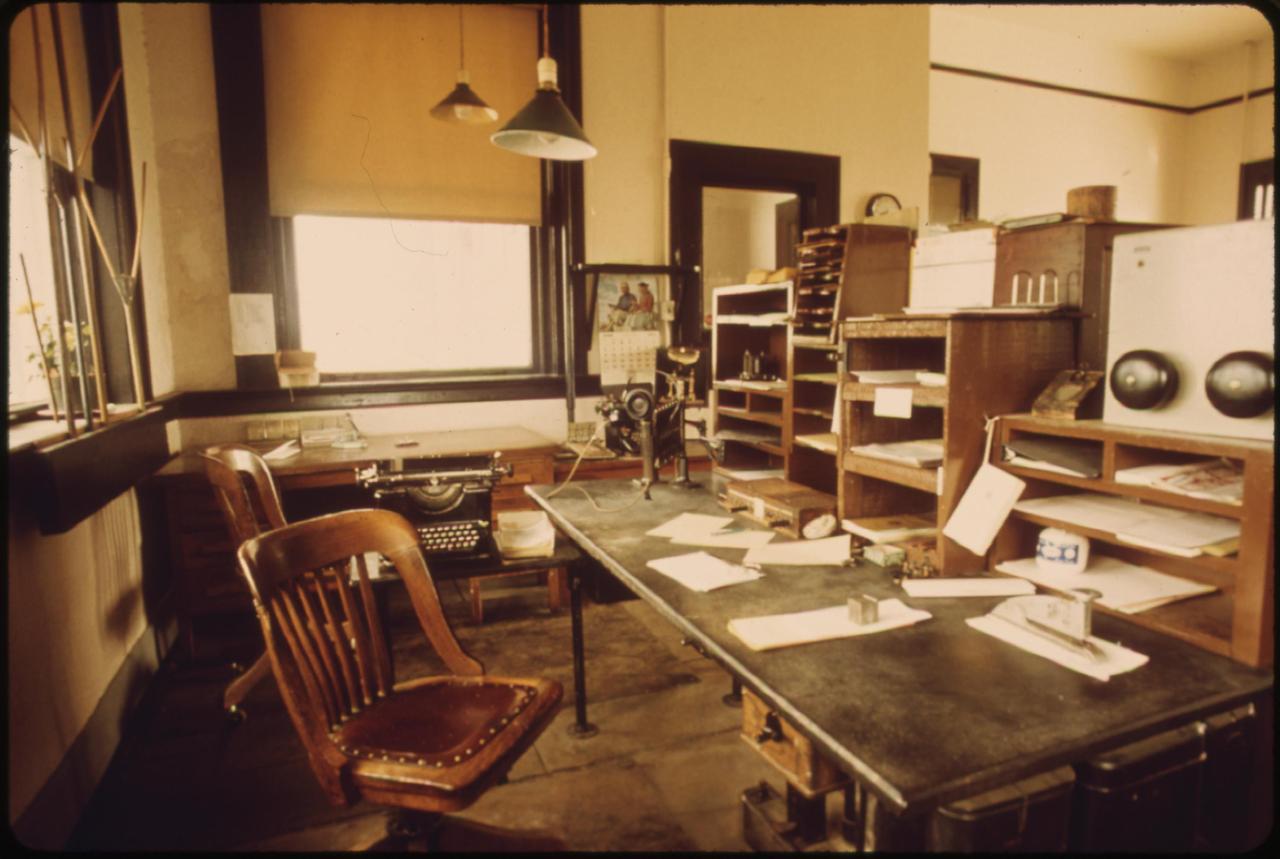
empty desk

Miss me yet?

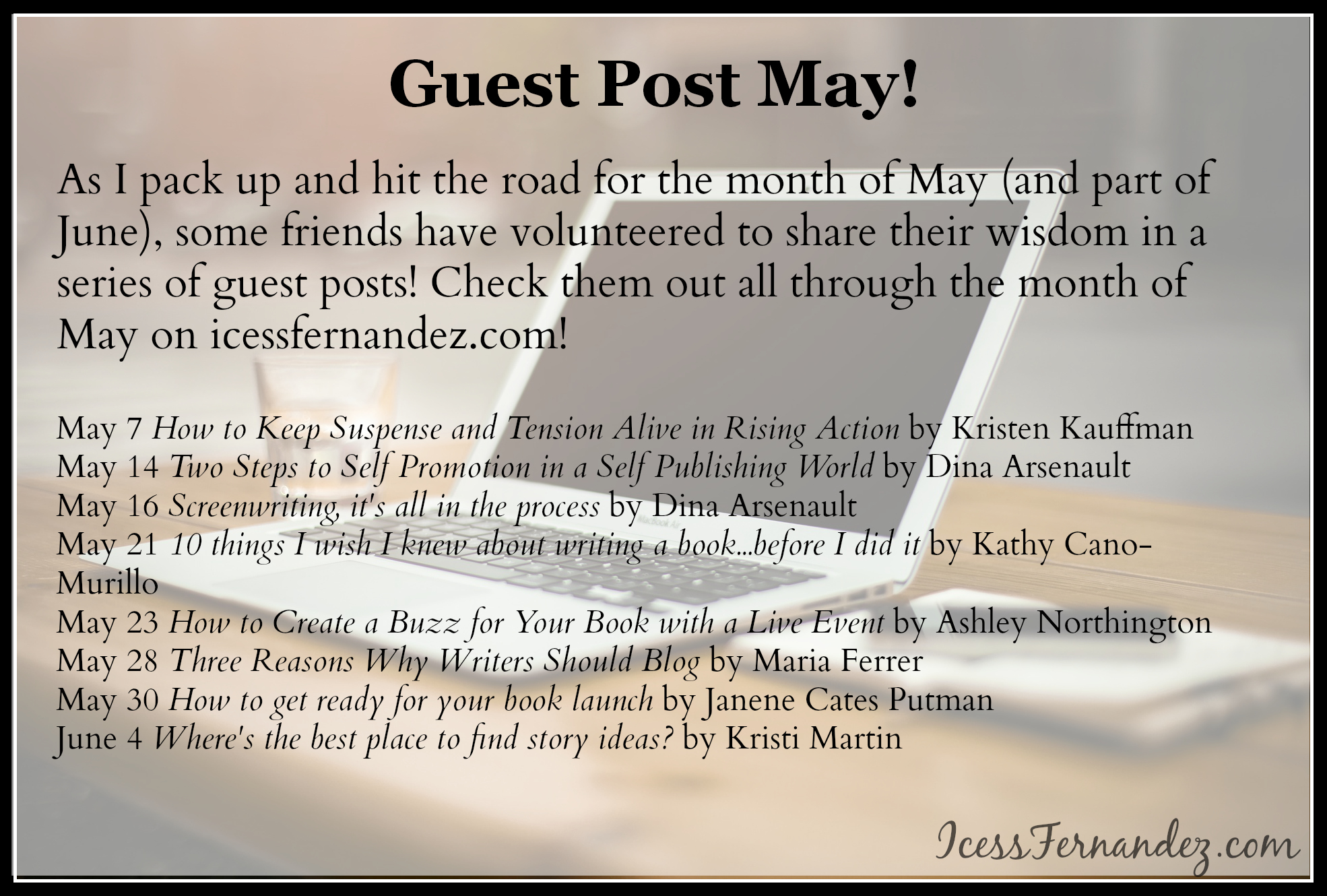
In case you didn’t know, I’m taking May off to move back to Texas and start a new gig so I’ve had to program a month’s worth of blog posts before I could pack the first box. Here’s a list of what’s coming for the rest of the month.

Guest Post May

Whoa. That’s a lot.

If you think about it, if the goal is to publish three times a week and to promote each post through social media, you have at the very least 12 posts to get ready. That’s not just writing them but also packaging them — photos, videos, clickables, and just making it look good on the page.

That’s a whole lot of work. A. Lot.

But it’s worth it. I’ve love how the guest posts are looking so far and how everything is being laid out. The act of putting things together for online/mobile is called digital packaging and, as I have learned recently, it’s a bit of an art form.  Digital packaging, and other skills, are just some of the things I’ve had to use to get this site ready to practically run its self for about a month.

Here are some other lessons I’ve learned so far.

Automate where you can.

Don’t underestimate automation. In the past, I was never a fan of it. I like to promote the posts live, beyond the initial Tweet or Google+ post. But, in reality, you can pre-post every single thing — the post, social media promotion, etc.  So I’ve done that and it has resulted in some interesting follows from new readers (I don’t look at pageviews for this site).  It’s also resulted in lost of shares.

To pre-post, I’ve used a combo of Hootsuite and Buffer. If you haven’t used Hootsuite, it’s a web-based social media management tool. I usually prefer Tweetdeck, however, it doesn’t allow me to post on Facebook or Google+. It also doesn’t allow me to save photos for use in Tweets. Hootsuite does all of that plus determines the best time to post.

Buffer is awesome and I love it. It’s similar to Hootsuite in the way it allows you to pre-determine when social media posts will be posted. However, it is limited. The free version allows only 10 “buffers” at a time. I’ve been able to choose the times items are tweeted out so it doesn’t over lap with what I’m doing on Hootsuite. Though I use Buffer to tweet out my own posts, I mostly use it to tweet out other things I see that I think readers would like to see and know about.

Guest posts are awesome

As you can see, I have a month’s worth of guest bloggers coming through for the rest of May and into June. When I first put out a feeler, I got so many people interested in blogging. That’s when I realized two things. 1.) My friends are pretty brilliant and 2) I really should have writer’s guidelines.

So, I worked with each blogger individually. Don’t be alarmed. By this I meant we talked about what they could possibly blog about. We brainstormed, keeping both audience and blogger in mind. The results are amazing and they helped lessen the load. I still wrote couple of posts myself (as you can see) but their help allowed me to be able to write less and pack more.

Another thing I am loving about guest posting is that the bloggers are bringing in some great expertise. Everywhere from promotion to blogging to writing, these bloggers know what they’re talking about.

Take the time to make each post visual, more than you usually would.

This is where all this digital packing skills are coming in handy. Because I had so many blog posts come in to be scheduled, there was time and energy enough to work on visuals for most of these posts. More than just picking a photo, some of the posts have info graphics and pinable art with them. I am loving the visuals and hope you do too.

Editorial calendars are awesome

Also because I was working so far in advance, I was able to plan out the month (as you can tell from the visual above).  Having an editorial calendar not only tells you what you will be publishing and when, it can also tell you when and how you need to promote certain posts. I’ve talked and used editorial calendars before but for making this site work with little oversight, it was a must.


That’s it for now. I’ll be back at it in June! Have a great May everyone and enjoy the guest posts!

Screenwriting, it’s all in the process

camera
Editor’s Note: As I go through the process of moving, a couple of my expert (re: smarty pants) friends — experts in writing, marketing, publishing, and social media — are pitching in until I get back. Enjoy their wisdom and visit their sites, which are listed at the bottom of their post.

When I was asked to write this blog about screenwriting, along with being honored, my immediate response was yes, of course, which was quickly followed by, what the heck am I going to write about?

Feeling both excited and overwhelmed at the same time, I immediately thought, why don’t I pose the question on social media, if you had the opportunity to write a blog on screenwriting what topic would you write and or would want to read about?  Screenwriting Process, a resource and service for screenwriters out of the UK posed an interesting response, “I would want to know about YOUR screenwriting process.” What is involved in creating your idea and the steps involved in conceptualizing your story, dialogue and characters onto paper.  I know I like to hear about other writer’s personal journeys and processes so why not write about mine.  So here goes, let’s dive into what is now known as my screenwriting creative process.

First, let’s start by defining what a screenplay is; according to Wikipedia,

“A screenplay or script is a written work by screenwriters for a filmvideo game, or television program. These screenplays can be original works or adaptations from existing pieces of writing. In them, the movement, actions, expression, and dialogues of the characters are also narrated.”

This, by definition is the `technical’ term for screenplay, but for me, screenplay means the heart and soul, breath and life of the narrative being projected on the screen. Each story I create really is a child that I nurture and grow.  These are my pieces of art, my human stories that I work, polish and craft.

By industry definition, writing a screenplay takes 5 steps:

  1. Create A Logline
  2. Write A Treatment
  3. Structure The Outline
  4. Write The First Draft
  5. Edit

Now I do follow these 5 steps but to make them work for me, I do tweak them to suit my writing style and process.

To tell a great story you must first start with a great idea, or in industry terms, a logline, our first step.  A logline is essentially a one to two sentence quick narrative describing what your screenplay is about.  Now my ideas or loglines really have no rhyme or reason as to how they come to me.  Each screenplay is different so where and how my inspiration comes to me varies as well.  It could be from a song lyric, having a conversation with a friend or like my film short Redemption, from a current news story, the Catholic Church child abuse scandal.

Once I have established my story idea, I generally move onto what I like to call the ‘backbone’ of my narrative or in industry terms, the Treatment, which is step 2.  The treatment is essentially a breakdown of what your plot narrative will be.  Again this generally is no longer than 10 to 20 pages for a feature length.  However, this is where my process varies, when I write my ‘backbone’ I try to be as specific as possible, include actions, plot developments, dialogue, character development if possible, ANY and EVERY thing I can think of when developing my story plot.

Essentially I am not only writing but structuring my treatment or ‘backbone’ at the same time, virtually combining step 2 of writing the treatment with step 3 of structuring the outline.  I found by not censoring myself and just allowing the story and the characters to play out in my head I am able to create a very vivid and solid foundation to build my screenplay with.  This blending of two steps was just a natural progression in my storytelling technique and process.

Now that my treatment has been completed I can easily move onto the fourth step of writing the first draft of my screenplay.  Since my treatment is so detailed it really is not as big of a step to move onto the first screenplay draft as the treatment could almost count as the ‘true’ first draft due to its structured plot detail, advanced character development and scene description already evident.  Again, I do not censor or try to edit myself in this stage I try to just allow whatever comes into my head to be put down on the page, as polish and crafting will come in the editing stage.

Lastly, we come to the editing stage which by all definitions is the final stage.  For me this is where the real creativity and storytelling come into play.  Here I like to play with my plot structure, my characters and scenes; I really try to create a gripping and captivating story that takes the viewer on an emotional journey.   The goal for me is to create characters that the viewers can either, relate to, root for, love or hate.  Telling the human story has always been a gift to me as I believe we all have a unique story that needs to be shared with the world.

Creative process whether it is in screenwriting, novels, and short stories or featured articles, each will have similarities and differences according to the medium.  But ultimately the outcome is the same, a captivating story meant to either entertain or inform its reader.

So there you have it, my creative screenwriting process.

But before I go, I pose this question to all the writers out there no matter what you’re medium; I would like to know what YOUR creative writing process is?


Please leave your answers in the comments below, I look forward to reading what each of your processes are!


Dina Arsenault is a public relations professional and a freelance consultant with A Cue Creative Consulting,  a boutique agency specializing in the art of branding artists and small business owners. She’s also a creative person writing, producing and directing her film short Redemption in 2007, which screened at the Reel Women International Film Festival in Los Angeles. Aresnault graduated with honors from Brock University in Communications Studies, earned a Broadcasting Diploma in Radio, TV and Film from Niagara College and most recently a public relations certificate from Simon Fraser University