The road to publication has many paths and Lloyd Francis had them all open to him for his debut novel From Rum to Roots.
But he chose to self-publish and he’s all the happier for it.
I had the pleasure talking with Lloyd recently. We talked about his road to publication and why did he decide to go the self-published route instead of others. For him, it was a matter of culture. Publishers are about the bottom line, not about the writing or what the book was about. He wanted control of it and wasn’t willing to let it go.
So he invested in himself. He took the time to read, write, and find an editor who specialized in story development (Not all editors are the same!). That has made all the difference, he said. His book reached number 3 on the African American Historical Fiction list on Amazon.
“Having a superior product works,” he said. “If you haven’ taken the time to take a ruthless eye to it, I think that you’re doing yourself a disservice. Each person who picks up your book is giving you an opportunity. “ (Click to tweet this idea.)
In the video below he gives us his three stages of self-producing a book.
There’s more to producing a book than writing, there’s an entire process. He compares that process to it to having a baby.
1.) The creative stage
This is the fun stage where it’s fun to create and explore.
2.) The gestation phase
That’s the carrying of the embryo — your manuscript. This is the revision phase where your piece grows into the book it needs to become.
3.) Then it’s the actual birth
Publication. Francis said this will require all of your attention. You have to nurture it, feed it, watch it grow. This is a full time job.
His biggest piece of advice though: authors need to become their own publishers. Learn how to pitch, why publishing functions the way it does, and the thought process of a publisher. This has helped him become the best advocate for his book.
Learn more about him and what he learned in the video below. Follow him on twitter @lgfrancis
It’s been a question I’ve asked myself for a long, long time as I get closer toward finishing the revision of my novel. Could it be too early to ask that question of myself? After all, I should be concentrating on the words on the page.
Yes, but knowing what I’d like to do will only help me determine how much MORE work I have to do — formatting, marketing, editing (finding one myself).
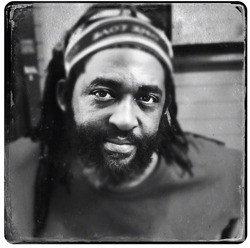
When I asked this question, one of my friends, Lloyd Francis chimed in. He just published his book, from Rum to Roots, and talked a bit about his experience through the self-publishing process and why he decided to go that way. (He’s got some great reasons!)
We’ll be talking via Google Hangout this week about this topic and I suspect others. I’ll put a post up soon after. Here’s a bit about him:
Lloyd was born in Oakland in 1961, a first-generation American child to Jamaican parents. As a child his trips to Jamaica in the 60’s and 70’s shaped who he became. Growing up in Hayward California he was steeped in the island tradition of reggae, Jamaican cuisine, and patois.
After studying engineering, Lloyd became a staff photographer for the San Jose Mercury News. He left newspapers to work for Yahoo Financial News Network and returned to journalism after 9-11. In 2001 Lloyd reported from Iraq for Newsweek Magazine, and went on to cover the war in Afghanistan. In 2004 he accepted a job with the Army Times Publishing Company and worked in Iraq intermittently for two years.
Currently he lives in San Francisco with his wife and two children.
So, what do you want to know about the self-publish processes? What do you want to know about his book? Let me know in the comments below.
You know how we come across stuff that we like to share or we wish we could keep in some way?
For me, it’s links about writing. I see lots of stuff, both good and bad, and I share them out on my Twitter and Facebook page. But sometimes it’s nice to have a bunch of links to read all at once, especially stuff that you’ve never read before.
Here are some of mine for the week. These are the ones I’ve either share or have seen floating by on social media:
Recently, a couple of writers had a discussion on creating/building a website/blog on Facebook. Where to build, who to go with, where to blog, what’s the difference — all of these questions came up. Most of these writers are my friends and what they know about blogging could fill a shot glass. (That’s okay because they have me <grin>)
I’m also starting to work with writers who are new to blogging and want to start building their platform. Questions about blogging come up often.
This post is for them and other writers who need help building a blog to help create their platform. I’m here to help. Just call me the Blog Doctor.
No, don’t call me that. That’s rubbish.
Here’s a break down to the blog/website debate. You can create a site out of blogging platforms, two in particular — WordPress.com and Blogger. You can do the same with WordPress.org but for now I’m limiting it to these two since they are the most common. They are also perfect for the beginning blogger and for those who want to do this as cheaply as possible until they can do something bigger and better later.
I’ve blogged on both WordPress and Blogger and they have their plus and minuses. Which to chose will depend on what kind of blogger you hope to become. I’ve broken down the formats on the characteristics bloggers tend to use the most and what will appeal to writers.
Ease of use
Big, beautiful buttons
For me Blogger wins this one. If you are a Google person, Blogger is extremely easy to use. You can respond to comments or approve comments straight from your email. Your readers can follow your blog through Feedburner, which you can then use to cater to them if you’re into email newsletters (I am and here’s where you can sign up for mine.) It’s easy to get a Gmail address with your domain (which looks good on a business card), insert a video from your Youtube channel, and installing Google Analytics is a breeze. One of my personal favorites are the big, simple buttons — a pencil to write a post, pages to view blog posts — that are across the top of the page. It’s like that through your blogging experience on Blogger, everything is streamlined and everything clear and easy.
That’s not to say that working with WordPress isn’t easy; it’s just not as easy as Blogger. One thing that I do like is that you have this groovy menu on the side as you’re blogging. It’s easier to get from one area of the blog to the other in one click. It’s also easier to put your posts in categories since the menu is right to the side of it. However, all this information does make the screen a bit cluttered, but I’m one who likes a lot of information right at her finger tips.
Hey now! The groovy menu
BUT it’s annoying that WordPress.com does not support Google Analytics. It does have its own analytics, which is easy to get to and read but it does have its limitations. I really hope that WordPress fixes this in the future.
Apps
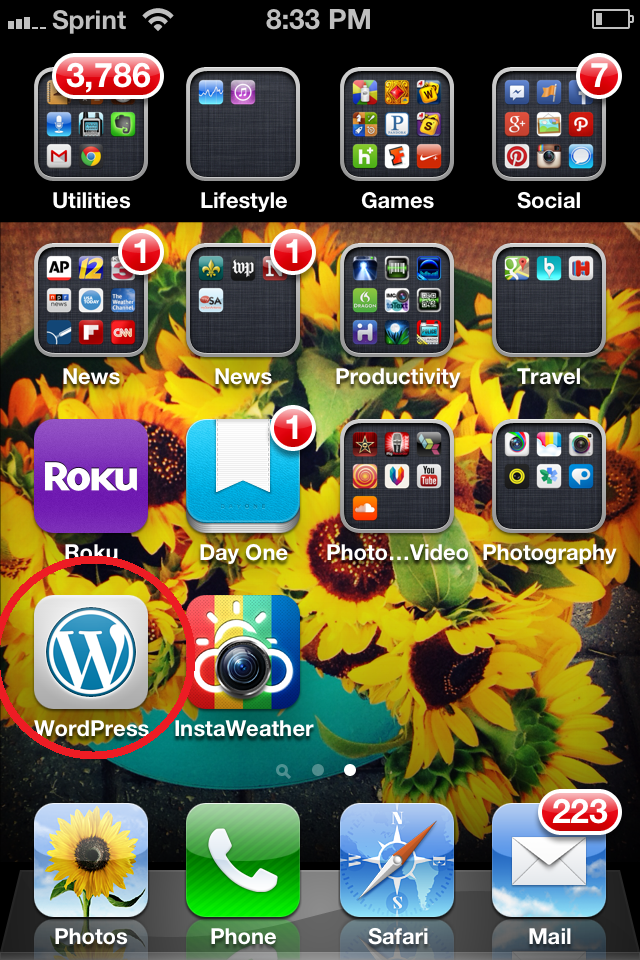
I’m not always near a computer when I get the time to blog. I usually have my lovely iPad with me, especially when I’m traveling. I’ve tried both the WordPress app and the Blogger app. To this I say neither. I use the Blogpress app which can be used for both. It’s easy to use, posts can be saved locally or at the blog site, and it gives you lots of great space to write.
WordPress app for iPhone. Not too shabby.
However, I have broken down and gotten the WordPress app on my phone. I don’t blog on my phone but if I’m taking my own picture for a post (which you should do to avoid getting sued) I go ahead and put it in the post and save it as a draft for later. Yes, the app is pretty easy to use and works great in a pinch.
Theme/How it looks
This one is a bit of a Catch 22. Although Blogger sites are easier to manipulate, there’s not that many cool themes to chose from. However, WordPress.com has lots of cool themes to chose from but are not easily customizable unless you pay extra for them. The even cooler themes also cost extra. It depends on what you want to do and how you want to grow as a blogger.
Domain
This one is easy. On Blogger you’ll pay $10/year for your domain. On WordPress.com you’ll pay $18/ year (it use to be $15).
Posting Pictures
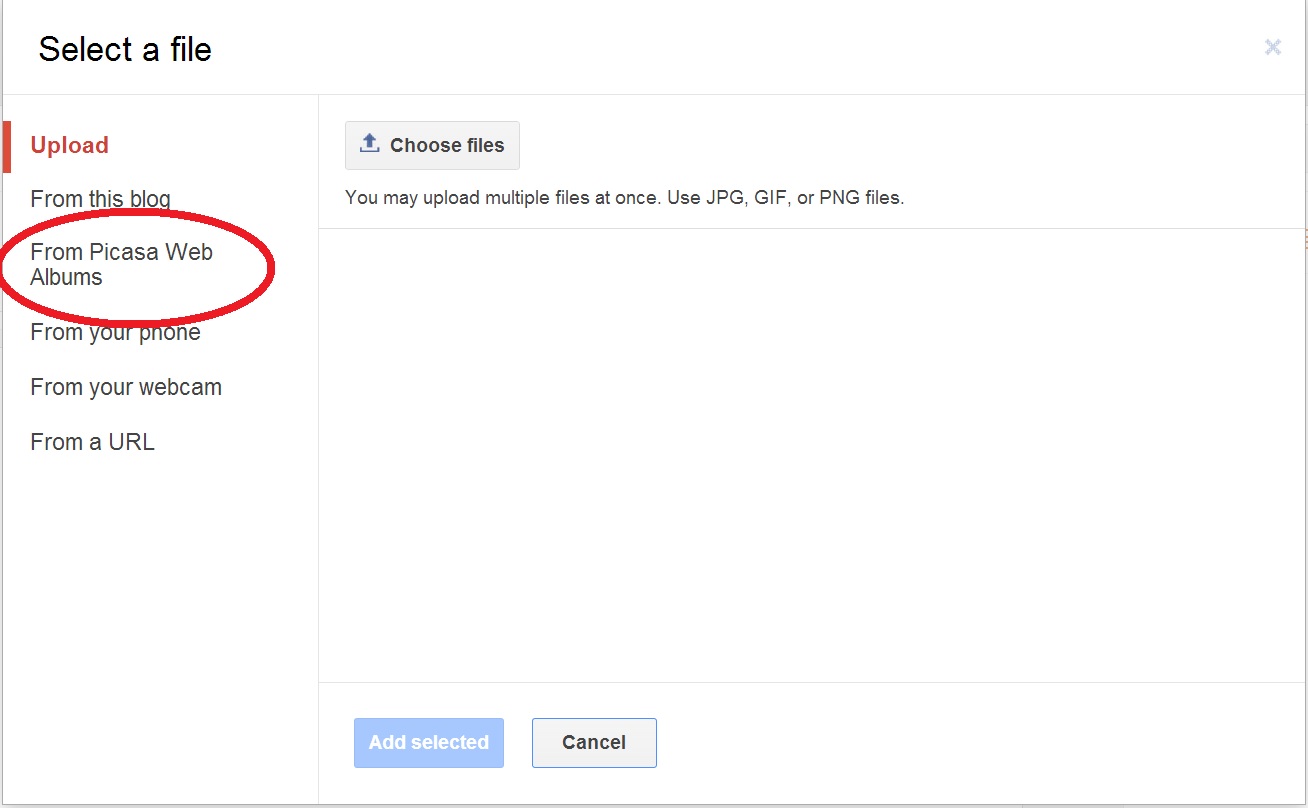
I miss you, Picasa!
This characteristic is probably the one that drives me the most batty. After so many years with Blogger and being a lover of Picasa picture uploading, all my pictures were at my disposal. Not so on WordPress. I have to go find the picture and either copy the link or download it to upload it to WordPress. It’s annoying and something I’m just going to have to deal with.
Why I moved from Blogger to WordPress
Other than needing a clean start, I know that I will eventually move to WordPress.org (the blogging standard) but I wasn’t ready yet to make the commitment. After having researched, I learned it was easier to move a WordPress.com blog to the .org than it was to move Blogger. Not that it can’t be done, it’s just easier.
I also like how my site is laid out on WordPress better than Blogger. The menu works better for my readers and the layout is clean yet stylish. However, I do miss Blogger’s ease of use and Google Analytics.
Another thing that I am LOVING on WordPress is that more people are finding and following the blog in a shorter amount of time. But Blogger has Google Plus which automatically lets other plusers know that you have a post up.
What do I recommend?
At the end of the day, when I work with writers on their platform, especially writers who will have to do a lot of things on their own and have never blogged before, I recommend Blogger. I do tell them the pros and cons, we go over what the standards are and where they eventually want to go with their blog. When it comes down to it, however, the writers I work with chose Blogger for pricing and ease of use. I don’t blame them. That’s where I started.
One of the most rewarding things for a writer is to be published.
I love it when things are published because it’s the fruit of your labor finally for all to see. It’s also a time of nervous second guessing. Did I write what I meant to write? Did it make sense? Are people going to take to it as I expected.
I’ve done this gig long enough to know the answers to those questions. It’s a rite of passage for all writers.
Publishing is another. Here’s what I published today.
The first is the Ramen Noodle story that I told you guys about a couple of weeks ago. It published today in my newspaper The Times (check out the top picture. It was fun writing it and the picture turned out great. A big thanks to my coworker Henrietta Wildsmith.
The second one I actually wished I had thought about for a blog post first. I was asked by Ray Ruiz, who is the head of the EGMN at the University of Houston, to write my tips for student journalists to become master storytellers. Here’s what I came up with. It was a pleasure to write this for Ray and I hope to get to write another post soon. I also hope the students take some of these tips and use them for their careers, which I am sure will be wonderful.
So, in case you didn’t see the links in the post here’s where you can read both of these stories.
During grad school, I had the pleasure of reading Tomorrow They Will Kiss by Eduardo Santiago. I was in a crucial part of my novel. I had a question to answer and I didn’t know what came next. It was not a writing block since I don’t believe in writing blocks. Nothing I was writing at the time felt right or genuine.
My advisor, Aimee Liu, assigned me this book to read since it was addressing some of the same topics I was writing about — the story of an immigrant and the burden of a big secret.
I devoured that book. It was the right book at the right time and got me through the slump in my novel. It had everything — novelas (spanish soap operas), Cuban characters, the past, the present, and the big thing, the lesson I needed to finish my thesis.
Months later, Eduardo and I became friends on Twitter. He’s given me encouragement through my process and it’s been a dream to have him in my corner. It also helps that he’s Cuban and just by being Cuban he is awesome. (Says the half Cuban girl writing this.)
Now, I get to use my blogging powers to ask him questions about his new book (which I’m excited to read) Midnight Rumba.
Here’s a bit about the book:
“MIDNIGHT RUMBA” TAKES PLACE IN CUBA BEFORE THE REVOLUTION AND
SPANNING THE YEARS 1940 TO 1959, WHEN FIDEL CASTRO CAME TO POWER.
THE NOVEL FEATURES SIX MAIN CHARACTERS WITH A SPECIAL FOCUS ON
ESTELITA DE LA CRUZ WHO WAS BORN IN 1940. “MIDNIGHT RUMBA”IS THE
SECOND NOVEL BY EDUARDO SANTIAGO, AUTHOR OF “TOMORROW THEY WILL
KISS”.
Interesting no? So, I’m getting some questions ready for Eduardo. What should I ask him? Leave your suggestions in the comments below.
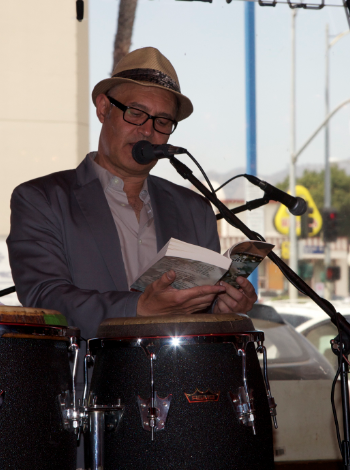
The interview gives great insight on publishing (business of) and why more Latino acquisition editors are needed. What are acquisition editors? Think financial investor.









![IMG_2551[1]](https://icessfernandez.com/wp-content/uploads/2013/08/img_25511.jpg)




 Icess Fernandez Rojas