Category Archives: Blog

Making something old new again
It’s been too long.
I didn’t mean to make my blog break this long. I needed a couple of days but a couple of days turned into more than a month and so here I am, my tail between my legs looking at my creation collect dust.
My writing is the same way. I haven’t written anything to completion. I’ve chipped away at a story for an anthology, had another piece accepted to a literary journal, and thought about the next step for this writer.
It’s not been a fruitful month and a half break. I apologize for that. I don’t have very much to show for it but I do have this.
The delightful sense of refreshment.
I’m taking a new focus to my writing an this blog–I am writing for the love of it. The love of the words on the screen, the privilege of having something to say. I want to let love guide my way and let it decide what I post and when. This is a renewal of spirit and I’m excited for it.
In that spirit, my goal for the next couple of weeks is to take something old and work on it to, making it new again. It’ll be the ultimate in revision. For this exercise I am taking a story I wrote several years ago and rewriting it. I’m a better writer now than I was when I conceived it so I’m interested to see at what I do with it.
I’ll keep everyone posted on my progress with it. And maybe it will be published in a literary journal?
One step at a time.
– Posted using BlogPress from my iPad
Location:Egan St,Shreveport,United States
Sharing is caring:

Reporter’s Notebook: Art without arms
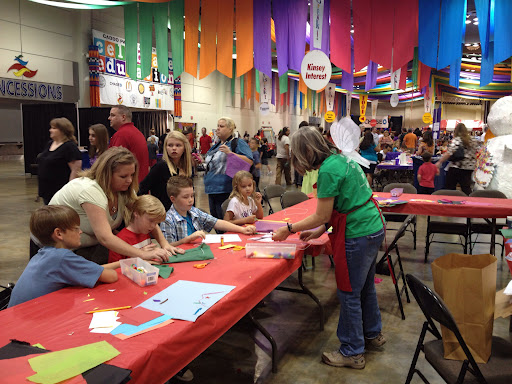
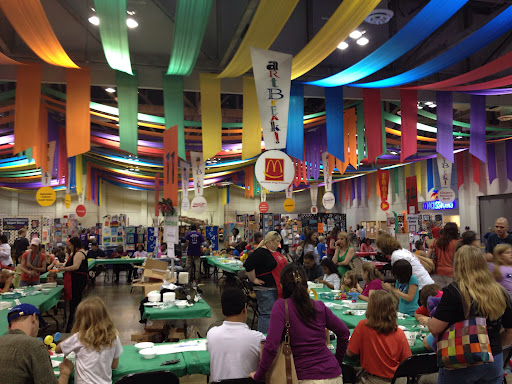
Anyone who reads my Twitter feed knows I’m not a fan of working on Sundays. Today, I covered a huge event in Shreveport called ArtBreak. This event is a tradition here and works toward expanding knowledge and understanding of art.
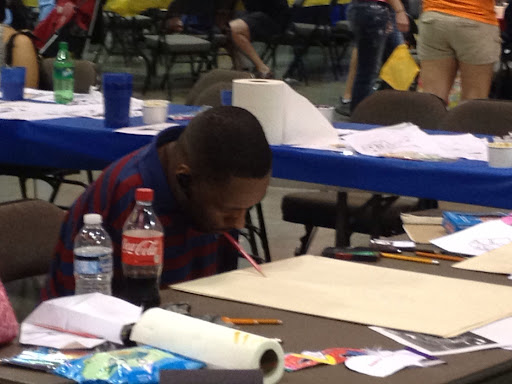
So while I was walking around, I see this man who has a pencil in his mouth. He’s drawing a Mickey Mouse picture. He has no arms.
Let me repeat: He. Has. No. Arms.
But he’s drawing. Come to find out he is an artist and works in pencil and charcoal. So I did a brief interview with him. Check out the video above.
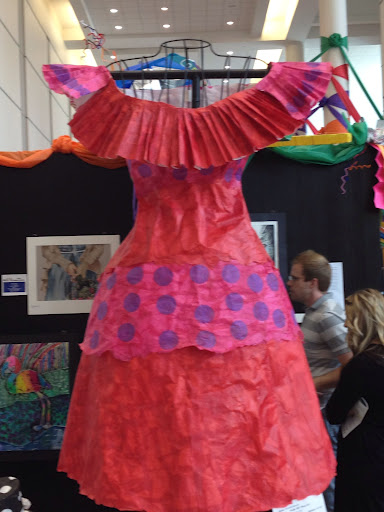
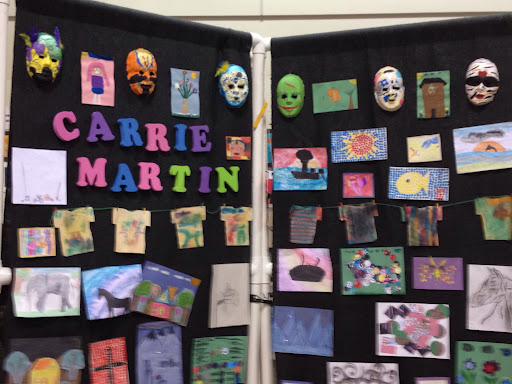
The event was held at the convention center here and there were thousands of people. It was overwhelming, however, it wasn’t the amount of people that made my head spin. It was the colors. Definitely the most colorful place I’ve been to in a long time.
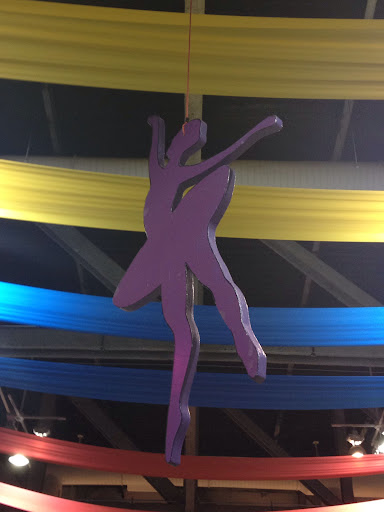
Here’s some pictures. Hope you enjoy!






Sharing is caring:

#MotivationMonday Revision, a micro study

Happy Monday, everyone!
I’m back this week and as promised I have a really good post to motivate everyone on their writing journey.
Last week, I spent some time in the revision state of mind. I have a long hate relationship with revision. Long before I became a journalist, I would spend days, weeks, months, revising my short stories. That was when I still lived with my parents and had posters of boy bands on my wall. I thought, at the time, that reading it out loud and listening to myself would help me catch grammar mistakes. I’m not sure how much that helped but what I did learn, rather quickly, is the rhythm of a sentence, and paragraph, a story. I learned where I wanted pauses and when I wanted something to speed up. I learned, so many years ago, when I needed to slow things down for dramatic effect and what I needed to slow down.
However, it’d be decades before I figured how to do what I wanted to do and I’m still not that good at it. It’s a process like everything else.
But during the revision process of my thesis, an advisor suggested that I read it out loud. I sorta did that but after awhile stopped because of time constraints.
So last week, I returned to that technique and added a twist, I recorded myself. I sat down with my piece which was only nine pages at the time and read it into a microphone and played it back, really listening to it. I could instantly hear where I could expand on a thought, where the rhythm of a sentence should be shorter or longer. Also as important, I heard places where I needed to pull back. What I thought was important as I was writing wasn’t anymore.
Here’s an example of what happens when you listen to the rhythm. These were the original sentences that were at the beginning of a paragraph:
As I walked home alone after my shift at Pepe’s Nightclub and Bar, I heard the
leaves breathe and the sidewalk yawn. I listened for things that weren’t supposed to exist.
Interesting with the personification of leaves and sidewalks but the rhythm was off some how. It didn’t sound right. After some trail and error, here’s how I expanded these sentences:
As usual I walked home alone after my shift at Pepe’s Nightclub and Bar and when I did I heard the leaves breathe and the sidewalk yawn. In the past seven years, I had trained myself to listen and feel for things that weren’t supposed to exist—a heaviness of night, a sudden rush of sound, a deep stillness.
This technique also worked with dialogue, which admittedly, isn’t my strong point. I tend to over explain stuff between quote marks. When I see other writers using them, I admire the tightness of the dialogue. So I took the opportunity to work on it. Listening to the playback, I knew I wanted the dialogue to not only be tight but also hint at something going on underneath.
Here’s the original:
I told the operator I was Papá ‘s sister. Papá had no other family but Mamá and
me. This, I hoped, would make him curious enough to take the call.
“Bueno?”
Mamá was on the other end, not Papá .
“Mamá , it’s me.”
A silence of long distance crackles and then a gasp.
“Nena? Is that you?”
“Si, Mamá . It’s me.”
“Are you okay? Are you hurt? I’m so scared for you, mi’ja. Everyday, I am scared.”
The changes I made were small but I think more effective.
I told the operator I was Papá ‘s sister. Papá had no other family but Mamá and me. This, I hoped, would make him curious enough to take the call.“¿Bueno?” a female voice answered.“¿Mamá?”A silence of long distance crackles and then a gasp.“Nena.”“Si, Mamá. It’s me.”“Are you okay? Are you hurt? I’m so scared for you, mi’ja.Everyday, I am scared.”
So there you have it, lessons from my latest in the revision realm. How do you revise? Is there something special you do? Would love to hear it!
Until next time, Write On!
Sharing is caring:

RIP Dick Clark
[View the story “Social media reaction to Dick Clark’s passing” on Storify]
Social media reaction to Dick Clark’s passing
Dick Clark, 82, died today from a heart attack. Minutes after the announcement, social media buzzed. Five of the top ten trending topics on Twitter were related to Clark’s life and passing — Dick Clark, American Bandstand, Ryan Seacrest, New Years Eve, and NYE. Here’s what’s out there.
Storified by Writin2insanity · Wed, Apr 18 2012 17:17:53
RIP dick clark, goodbye to another legendKyle Toto
Guess 2012 will never end. No Dick Clark = No New Year!!Rivalution
RIP Dick Clark. Of all the rock legends & entertainers I have interviewed/written about, you trumped them all #DickClark #americanbandstandwriterjonallen
"Music is the soundtrack of your life."- Dick Clark, Nov. 30 1929-April 18, 2012 #dickclarkYou will be missed. http://pic.twitter.com/P21f9Fm0Charles Luck Stone
RT @OneHardTruth: RIP Dick Clark. Thanks for the New Year celebration memories. U will be missed. http://pic.twitter.com/4gocnafa❤ReBeccA❤
RIP #DickClark – has anyone had more impact on music & television in last 60yrs? Amazing man, remarkable career. #ForNowDickClarkSoLongPiers Morgan
So sad to hear about the passing of the legendary Dick Clark nicknamed "America’s Oldest Teenager" http://pic.twitter.com/6gjWBAQSJ Kelley Studios
RT @MJJFAForum: Dick Clark and Michael- Bandstand’s 50th anniversary 2002 http://pic.twitter.com/iuKE8L95xXx*SusanJackson*xXx
R.I.P. Dick Clark http://pic.twitter.com/3ZrEMoOGGloria Aviles
Dick Clark (1929-2012): smart, charming, funny and always a true gentleman http://d.rsfz.co.uk/1SCq3v Ryan Seacrest NewsRyan Seacrest News
Our sincerest condolences to Dick Clark’s wife, Kari, his family & all who loved & admired him which includes the whole Estefan clan!Gloria Estefan
R.I.P. Dick Clark. New years rockin eve will never be the same. http://pic.twitter.com/Ig2fqvcpBob Mills
RT @mchappell51: Actually was at Dick Clark’s home in L.A. way back when. He hosted Ball State volleyball team in NCAA finals and I was covering them. Cool.Art Hill
RT @alyankovic: Such sad news. RIP Dick Clark. http://twitpic.com/9bd5ufRey Trejo
R.I.P. Mr. American BandStand Dick ClarkBella Elisha
@CBSPhilly is remembering Dick Clark at 46th/Market where he hosted #Bandstand in Philly! http://pic.twitter.com/x20qTB6lElizabeth Hur
Dick Clark. I love you.Vicki Apodaca
RIP, Dick Clark…..thank you for ALL of your many years of music and entertainment!!!!Felicia Nichols- Crow
Sharing is caring:

Writing style tip: Avoiding passive voice
I’m currently reading a friend’s piece and giving her some notes on it. I love doing this for friends because it just makes me more proud of them than I already am. It also makes me feel good to help them in anyway I can.
In additional to all the warm and fuzzes, it’s a great way to get into the revising mind frame, which I have to be seeing that I’m revising my own piece for publication. One of the best ways I like to get into this mind frame is reading books like On Writing Well and The Elements of Style. I also like to devour grammar books, or at least leaf through them.
I’m currently in American Heritage’s Book of English Usage and saw this passage that I underlined many moons ago when I was trying to fix my passive voice problem.
“A good test is to look down the page and circle (or make note of) every form of the verb be (is, are, was, were, etc.) and any other week verbs like seem, appear, and exist. If the page is covered with circles (or if you’ve grown tired of counting), you should consider rewriting the page using active verbs and the active voice.”
It must have worked because it’s rare the notes I get back now on passive voice. My Achilles heal? Subject verb agreement and tenses. Every. Single. Time.
Hope this is helpful. Back to work I go!
Sharing is caring:

I bet you’re wondering where today’s post is? Where is your #MotivationMonday? Where is the insight that helps you through the day?
Well, maybe not through the day…
I’m taking a slight break, folks. (the rest of the week, actually). I’ve got a piece to get ready for submission and I need to focus. Ironic, no? The writing blogger needs time to write. Why, yes. She does.
However, I have some posts on deck to schedule to run this week. However, I’ll be pretty quiet here the rest of the week.
I’ll come back strong on Monday with a #MotivationMonday and a week’s worth of posts. And if all goes well, a submitted story.
In the future, I hope to have guest writers for the blog during the weeks I’m off preparing stories for publication. If you’re interested, hit me up. Leave a comment with a way to contact you and I’ll be in touch.
Until then, there’s LOTS of past posts that will help fill the gap.
See you next week and Write On!

Sharing is caring:

#MotivationMonday The writing sweet spot

I love going home to Houston but not for the obvious reasons.
Of course going out with friends and spending time with family is great. I miss them terribly. However, something amazing always happens when I go home.
I get work done. This time, I finished one piece and half a scene of another piece I’m working on. It was amazing to be in the zone like that. There’s nothing like it–that feeling of comfort. It’s safe.
For me, Houston is where it all started, in my parent’s house writing little stories on my computer, an Apple IIe, in my room by myself. The desk and the computer were shoved into a corner of my bedroom because it was the only place where it fit. And while all the other girls were playing with Barbie dolls, I was reading and writing. I guess I’ve always been a writer, even before I knew what that was.
So now when I return home, some of that magic comes back. The stories I write are different now, of course, but that sense of wonder and the rhythm of clacking keys are still there. The imagination takes over and the Muse not only stays longer, she’s having coffee and reading the newspaper, overnight bag at her feet.
 I get the same feeling when I see the Houston skyline. The first time I remember seeing that glorious skyline in earnest was my first day of college. I had an 8 am class but I had never driven on the freeway before and I wanted to drive before the infamous Houston traffic congested the roads. It’s about a 30 minute drive from my parents house to the University of Houston campus and requires at least two freeways to get there. So I’d be on the road at 5 am, when it was still dark. I’d get on I-10 heading west and a couple of miles in, the lit up skyline would appear, winking at me, welcoming me to what was a new chapter in my life. When I see the Houston skyline, my skyline, I believe all things are possible, all dreams come true, and it could all happen among the tall, shiny buildings. It may be a simplistic way of seeing my hometown but for me Houston, and in particular the skyline, will always be my fairy dust. It has been good to me. It started my writing career and it’s nice to go back for a visit to refill my soul with optimism.
Every writer needs a place. Not just a desk to work from but a place that recharges the batteries. We take a lot of hits and sometimes I feel like I’ve taken more than my fair share. We get rejected. Told that our writing is sub par. We get discouraged. We yearn for more time to write but don’t get it. It’s enough to become depressed or at the very least agitated.
But when a writer goes to their place, rejection doesn’t exist. When they are in the best space in the world, where there is comfort and love and joy and happy memories, there is a freedom to writing. You are liberated. You are fearless. No one can touch you.
Every writer deserves that place and for today’s #MotivationMonday I challenge you to find it and spend some time in it to remember who you are. Why is it so important to find this place? Because this is your sweet spot, where you produce the best stuff. It’s no longer writing, it’s play and discovery. So when it comes on the page that way, it’s golden. It’s automatically good. (still needs revision though).
So find your sweet spot, spend some time in it, and write at least one scene. Remember how good you feel and take that feeling with you until the next time you can get back to the sweet spot and create.
Write On!
Sharing is caring:

Writing around the Web
It’s finally Friday and it’s time to think about the weekend. Maybe you have some writing in mind? Sending out query letters?
Whatever your plans, I’ve put together some interesting writing links I’ve read through out the week that you should check out. Hopefully, it’ll get some more of your juices going.
I hope to make Writing around the Web a regular Friday thing.
Is your idea novel worthy? Well? Is it? Find out if it is with a post from Writability.
Some great pointers on internal dialogue from Writing is Murder.
Want to do your writing full time? Some thoughts from the original Pen Monkey.
Description is an art and here’s how to get started on it.
Sharing is caring:

#MotivationMonday Eight ways to create a reading list for the writer

After some time away, its only fitting this #MotivationMonday piece come from our good friends at Poets and Writers . Inspiration struck while reading their Inspiration issue.
How do you find good writing?
You’ve heard me say before that writers read. There’s no getting around it. But it’s equally as important to read quality writing. Have you heard of you are what you eat? It’s true for writing — you are what you read. So chose carefully.
But how to chose? Well, that is a bit of a challenge because there are so many sources — bestseller lists, award winners, award nominees, magazine recommendations, librarian and bookstore recommendations, friend recommendations. etc. Does it mean that you need to read all of them.
No. But it does mean that you should pay attention.
I’ve been lucky that for the past two years, I’ve had an advisor guiding me through creating a reading list. Now that I’m out of that realm, I have to create one for myself.
This is how I plan to do it.
1) I’m going to play it safe for a couple of books. I going to read books from some of my favorites but here’s the twist — it will something from their cannon that is different from what I’ve read. So while Isabel Allende is a terrific prose writer, I’m going to read one of her memoirs.
2.) I’ll going to eye books from other writers I’ve come across in graduate school but wished I had more time with their work. Aimee Bender came to mind. I read The Girl with the Flammable Skirt and I wanted to spend more time with her stories but couldn’t because of the quick pace of my program. I’m going to be reading The Particular Sadness of Lemon Cake soon.
3.) I’m also going to fuel my interests. I’m a big mystery and noir buff. So Raymond Chandler will make it to my list as well as some of the noir anthologies such as Havana Noir.
4.) I’m going to deliberately go out of my comfort zone. I’m going to read some non-fiction. Right now I’m reading The Best American Travel Writing of 2011.
5.) I’m going to read genre fiction. I know! Gasp! But here’s the thing, really good genre fiction are fantastic reads because they know how to develop an appealing plot. I want to learn that so I’ll read a couple.
6.) Talking about learning from books, that’s essentially what we’re doing. So I’m also going to chose books that I can learn from. I’ll read samples on online and determine what can be learned from them the book before I engage. I’m also reading ( non-spoiler) reviews to know more about them.
7.) And, since I have dozens of books that I have purchased that I didn’t get to, those are going on my list as well.
8.) Don’t forget the classics!
The point of a reading list is that it’s a journey. With each book you read on your list, you’ll find another to read. And then another. And another. That’s a good thing. It’s better to have too much to read then nothing at all.
These books are teacher and each one have a lesson for you, the writer. Look for it as you read and apply it to your writing. I promise you’ll be wonderfully surprised!
Write On!
—
– Posted using BlogPress from my iPad
Location:Market St,Shreveport,United States

 Icess Fernandez Rojas