Gotta say, one of my favorite freelance assignments so far.
So, what are they doing for Latinos this year? Lots with lots more planned in the future. The festival, essentially, put all their Latino programming together in order to highlight it. It’s a start and depending on this year’s reception, this thing, SxAmericas, will grow.
This week, my latest commentary was published in The Guardian and boy did I open up a can of worms today.
As of right now (about 1:30 p.m central) there is more than 129 comments on my commentary. I haven’t read the comments yet but friends have said it’s pretty vicious. Frankly, I expect no less. I wrote somethings that probably set some people on fire.
But that’s the great thing about the Internet, no? It’s the opportunity to express opinions even if people don’t think that they’re valuable.
For Afro Latinos, the internet and more importantly, social media, has been a blessing. Because of social media’s purpose (the ability to connect people) I can join my fellow Afro Latinos on the east cost and in other parts of the world.
For someone who didn’t grow up with other people who looked, acted, or sounded like her, being able to reach out and talk to other Afro Latinos through Twitter or even this blog has been amazing.
So for my fellow Afro Latinos, I want to know…how has it been for you to connect with others through social media? What have you discovered through the Internet that you didn’t before?
There’s something about being on the later side of your 30s that makes you re-evaluate every decision you’ve ever made. That’s when you think…
“What the heck am I doing?”
That’s when that sudden feeling that those plans you made in your 20s, when everything was bright and new and shiny, has, indeed, been just hopes, not really plans.
My birthday was last week. I’m now officially closer to 40 than 30 and am wondering what the heck am I doing with my life! What the heck did I do with the beginning of it? How did I get here?
I never had a quarter life crisis; I was too busy living and working to question my role in the universe or the direction my life was taking. There was a stubborn focus at 25 that I laugh at now, a little girl spinning her wheels with a map of Narnia in her pocket. But this was how most of my friends were at that age, career focused. That was until everyone started getting married. So, marriage was like that game of musical chairs (Do kids still play that?) when we were growing up — everyone was so keen and quick to attach themselves to someone quick before the music ran out. I laughed at that. It’s not time yet, I’d say. I happily continued toward Narnia.
Then came the babies. Babies became the new marriage. Everyone had one. Some have several. Some had babies and houses. All of these precious moments in taunting unison on social media. Tick, tick, the music is about to stop and soon you’ll have nothing. It was still too early and Narnia beckoned.
So, now here we are and the music has ended. Usually this is the part of the blog post where there’s some sort of personal empowerment speech, some I’m happy being the fish-out-of-water moment. There’s none here, I’m afraid. While I don’t feel sorry or sad or even as if I wasted my Narina journey, I do feel that some of that journey was just busy work.
If 30 is the new 20 then 40 should be the new 30? I hope not. Forty should just be 40, wise and intelligent and in a position to laugh at the 20/30 year-olds with a twinkle and a glass of Riesling. I want there to be a sense of security at 40 that I thought I’d get at 30 and that the lessons from so much wheel spinning and work come to fruition. I’m looking forward to that.
Direction? What the heck is that? I’ve thrown my map to Narina away a long time ago and decided not to play that game of musical chairs. Not that that decision hasn’t come with some heart break but it’s come with more wisdom than pain.
Humans yearn to live the life worth living, what ever they think that is. However, that is the question they’ll spend a lifetime answering is what exactly that will look like. At this point, dear readers, I can’t tell you what it looks like but I can tell you what it doesn’t and for now that’s good enough.
Meanwhile, there’s this wardrobe I need to go sort out….
Thanks HuffPo Latino Voices for this image! Kinda wish I had her hair.
As usual, I’m really bad at telling people when stuff like this happens. You would think as a communicator, I’d be better. My Twitter and Facebook followers got a good dose of this yesterday, though. And of course those on the email newsletter list were among the first to know.
I don’t look like Sofia Vergara. Guess what? Neither does Sofia Vergara.
J- Lo, Shakria, and even Katie del Castillo don’t look like what you’ve seen on TV. These are Latinas whose images we are bombarded with as standards or definitions of what Latinas should be. Sorry to tell you this but this is all myth. These are not what true Latinas bombshells are. These are just examples of how a good push up bra and the best makeup money can buy can fuel a stereotype that, frankly, we’ve lead you to believe because it’s easier to make money off of it than actually trying to debunk it.
This definition of being of a Latina is distorted at best and absolutely inaccurate. Ridiculously inaccurate. This appalling stereotype only exists because someone, somewhere, in some place in time, thought that women with Spanish surnames were the best and most exotic thing since the banana or cocoa.
Banana or cocoa. Yes, I took it there.
And now we have super Latinas. Bombshells. They sing, dance, act, and have photo shoots. That’s all great. There’s nothing wrong with that hustle. If I had that opportunity to make my money that way, I’d run to my next magazine cover shoot in my Louboutins, too. But here’s the thing…that’s not all there is to us. Never has been. There is so much more to being a Latina than you see on your movie and television screens or on magazine covers.
What is the Latina Bombshell? By the modern “definitions” she is sexy, sassy, loud, beautiful to the point of being obnoxious, sometimes sex-driven, and submissive. That’s the important part. She is submissive to “what is in her heart”, which in many interpretations is to her relationship partner.
Those qualities do not define me. Nor does it define my friends. Or the mothers of my friends.
Growing up, this was the stereotype I’ve had offered to me as a Latina woman. This was my only option because the goal was to attract life opportunities by shimmying my moneymaker in front of decision makers who would then take care of me some how. I needed to embrace it, society said. This was who I was and I already had two strikes against me — Black and Latina. I needed to use that exotic mix to get anywhere in life.
But in my mind, there was never a question of embracing that stereotype. There was always a certainty of rebelling against it.
That was the gift of two progressive Latino parents. The rule in the house with my Cuban father was always to speak up. The soft voice will get you no where. Speak up, Papa said. There’s a voice there that needs to be heard and mi’ja, people need to hear it.
Education was paired with sacrifice. Homework first, television second. College first, then marriage, if you chose that. Keep going. Always keep going. Stubbornness was called perseverance in my house. Adapt. Survive. Win.
I know I wasn’t the only one who was raised like this. This is what being Latina means to me.
So, because I rebel against this stereotype, here is what I’m offering in this blog post today, a new definition of the the Latina Bombshell.
Latina Bombshell = a woman of Latino descent with the following qualities: intelligence, opinionated, leadership, strength. The new Latina Bombshell uses failures as opportunities. She’s a hustler — driving business and commerce as easy as she can bat one of her eyelashes. There’s no apologies for being different because it’s an honor. Different means unique and being a trailblazer.
Actually, come to think of it, these characteristics sound familiar. This sounds like how I would describe my mom. And the more I think about it, the more it sounds like a lot of moms and my friends who are raising their own little bombshells.
Interesting.
Maybe the true Latina Bombshell has been there all along, we just had to get past the smoke, mirrors, and the push up bras.
Icess Fernandez Rojas is a writer, blogger, teacher, and journalist. Her commentary has appeared in The Guardian and on Huffington Post Latino Voices. Her fiction has been published in literary journals/anthologies such as Minvera Rising and Soul’s Road. Her first book, the beginning of the Jennie Manning series, will come out next year. In addition to writing, Icess teaches fiction writing classes. To learn more, sign in and receive regular emails. (No spam ever.)
I could say that I didn’t have a great childhood but I’d be lying. It was great and in retrospect, I didn’t know that growing up in east Harris County in the 1980s was anything but ideal. I do remember, however, being chastised for being different. Different hair, face, color, language. But despite it all, I had my stories.
This was how I coped with the world. I told to stories to myself in my head. In my mind I was a pop singer/lawyer/astronaut who saved the world while simultaneously having the number one record in the universe. In my mind I was She-Ra, princess of power, and in reality I was royalty but had to keep my secret identity in order to stay safe from the enemies of my people.
To say I had an over active imagination was putting it too mildly.
My dad told me stories, too. He told me about his world in Cuba, what it was like to live there and to grow up there. He told me about the time Castro paraded into Havana. He told me about escaping his home country by pretending he was two years older than he was and how my grandmother had an employer who helped with the “transfer”. There were nights my dad would tell me about hunger, and poverty, and pain – concepts my small mind couldn’t completely understand.
My mom read me stories. In fact, she was the person who taught me how to read in English and instilled in me a love of Spanish soap operas. There was the one where the poor girl was really the rich girl but the father/mother/family never knew they existed. However, the evil villainess did everything she could to stop them from knowing. Then there were my mom’s stories, filled with poverty as well but also love from a strict mother and a protective father.
I became a writer because I was raised as a storyteller.
I wish there was some sort of deep thought to this “becoming a writer” thing. Like maybe because I want to change the world through words. (I’m a journalist. I already do that.) Or maybe there is nothing else I’m capable of doing. (There’s a little bit of that but surely I am capable of doing other things. Not sure what they are, though.) There is no deeper meaning to being a writer for me than this: I love a really good story.
There’s something comforting about a story with a beginning, middle, and end, to tell someone a tale and have them interested in it. I love live readings because you can feed off the audience. They want to know what happens next and they listen, sometimes at the edge of their seat, for your next work.
I love the way stories keep us, the human race, hopeful. We know that life doesn’t always have a happy ending but our stories, most of them, have them. And they have meaning and structure and, in a weird sort of way, there is a justice there that we can’t find in our average lives. Hope. That’s what stories do, they give hope, and writers distribute that. Writers give the world hope.
So, in a weird way I am a writer because I am hopeful and believe in silver linings and wishing upon a star. I write the heartbreaks that are healed by righting the wrongs. Bad people get their just desserts. Good people walk into the sunset a different person than they were before.
And those people who were different – different hair, face, color, language – they get their happy ending, too. I make sure of it.
As for my over active imagination? Well, it’s not quite as active but still useful to me as a writer. However, it doesn’t take over my brain as it used to as a kid. Those days, unfortunately, have passed. Now, if you’ll excuse me, I have a long to do list today. I have to run off to save the world while cutting my next hit chart-topping hit.
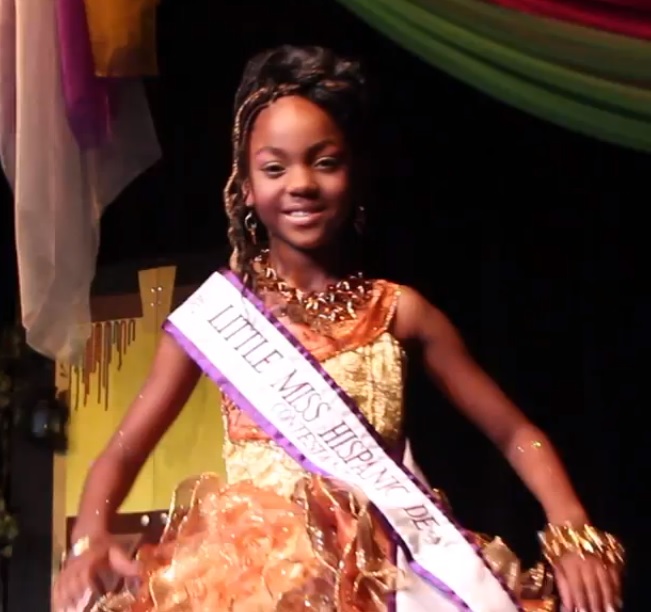
Congratulations on winning Little Miss Hispanic Delaware! Despite what came after your win, know that you are a winner and no one can take that from you.
I’m writing you this letter because I am also an Afro Latina. That’s what we’re called because part of our roots come from Africa. We have darker skin and courser hair than our other friends. But this stuff you already know because I know, even without meeting you, that you are brilliant.
So, let me tell you something you don’t know, something that is going to be hard to understand for someone so young. My love, this will happen to you over and over again in different ways and sometimes by the people who claim to be Latino/a themselves.
I know. We are all Latinos and come from places that speak Spanish, eat delicious food, and have a zest for living that few other cultures have. I understand that perhaps one of your other friends is also Latina. She may have lighter skin and doesn’t have to straighten her hair with chemicals. You both share the same culture, but in this world, she will always be seen as beautiful and you will be seen as exotic. Some will call you ugly.
This is what happens when people label and expect people to be a certain way. When you are different, and different in a way that insults people’s perceptions, you are the last person in the world they want to acknowledge. They want you to not exist. They fail to see the beauty in life and chose to see it with boundaries.
And some of this will come from the people you love the most, your own Latino community. And it will hurt. This is an issue that few people talk about much less try to correct. Look at the publications and television networks that represent us. You are hardly there and if you are, you are never the lead or front and center.
But don’t lose heart, lovely. There is change coming. As Latinos grow and become more educated in this country, this idea of the typical Latina — what she looks like, where she’s from — is becoming more accurate. There are women like Soledad O’Brien, Ilda Calderon, and Concha Bukia who are changing the world just by their existence. They are undeniable forces for good and they are cracking ceilings and busting doors so that one day, the thing that happened to you and to me and other dark girls with pelos necios, doesn’t happen anymore.
I want to say that those changes will be quick and that in one year things will be as they should. They aren’t but changes are happening and that is important to understand. Changes are happening. They. Are. Happening.
And there are Latinos out there who understand. And they know. And they get it. They are out there, lovely. Find them. Join with them. Exist in that world because they will be there to hold you up when things happen.
So, how do you deal with things when things happen. (And we both know what those things are.) Handle them like the princess you are, nena. With grace and strength. Don’t take no for an answer but don’t get loud and crazy in front of them , that’s what they expect. You must be better than you are and better than what people expect you to be.
At this point you may think that this color is a burden. Not at all. This is a gift, your super power, your secret weapon. Because you will know what it’s like to be different and discriminated against, you will be able to recognize it when it happens to someone else. You’ll be able to lift them up as I am doing with you. And then they will pay it back with someone else and so on and so on. This super power means you have the potential to stop this ugliness just by being you. If that is not a gift, I don’t know what is.
Jakiyah, I want to leave you with this. You will have an amazing life. There is more beauty in the world than there is ugliness. Just follow what is true and good in this world and things will work out. It may not be an easy journey but, as you already know, that doesn’t make it any less worth the trip.
This week, the group Latism (Latinos in Technology and Social Media) will have its annual conference in New York. I am filled with unspeakable rage sadness that I couldn’t attend the festivities this year.
I attended last year’s event in Houston and let me tell you, this was an eye opener. I’d been to journalism conferences all my adult life but this was different. This wasn’t about how to cover a story but about blogs.
Not just one type of blog but all kinds of blogs. Blogs I’ve read and others I’d never heard about. My eyes were opened to a whole other world and in the time since that conference, I’ve trying to keep these three lessons in mind.
1.) A blog is a business.
Nely Galan said don’t buy shoes, buy buildings. Get your own chips to play in the game. Been gaining my own chips ever since. The building? You’re reading it.
This was the first time I realized that this blogging game isn’t really about writing your thoughts and having them float out in the interwebs. No, my friends. This was about business and your blog can be your business. You can easily become an entrepreneur with a domain and a credit card.
Granted this is an easier concept if, say, you’re a food, travel, and/or fashion blogger. What about blogging writers? Yes, this is a business as well because one day we’ll be selling books and we can easily do that from our blogs. That doesn’t happen over night, you have to put the work into your blog just like you put it into your writing. So there. Blogs = your business.
This was the lounge we could lounge in. Why isn’t anyone there? Everyone was too busy learning.
2.) Blogs are a responsibility
Because blogs = business, it’s also a responsibility. Not blogging for a long while without a reason is like not going to work and expecting the pay check to still be deposited in your account. A blog can be your platform to something else or the platform from where things can happen.
What does that mean? Let’s take my friend Sujeiry Gonzalez for example. She sought to be a relationship expert.
Sujeiry Gonzalez is the one in yellow.
She has an amazing blog from which she has written posts and given out advice. From there she wrote a book (which I reviewed). From the book and the blog, she’s written on other sites and publications including Babble.com. Shine on Yahoo, and Latina Magazine. Now she’s giving out her advice on the radio in Los Angeles and has become a media personality. All that came from blogging. It was her platform, the first step on her journey. (And all that since I met her last year. She’s been a busy girl.)
3.) Community is important.
If I’ve said it once, I’ll say it again — community is important. Latism gave me a community to tap into, especially when it came to creating a new blog and then learning how to run it. It’s more than just content — it’s quality content, knowing the audience, and getting it to them through social media. Those concepts all came home to me during that conference in Houston.
Latism is also a group that is filled with tons of examples, or what I like to call tons of Sujeirys. Each person in Latism has their own journey through blogger land. When they reach out, there are helpers ready and willing.
Me at last year’s event
Of course there are the obvious things I learned/took advantage of last year — networking, training, business coaching — but these three things are the things I continue to work on a year later.
It was an amazing time at the conference. I really wished I were going this year. However, that doesn’t mean I haven’t been planning for next year.
Question: Have you been to a blogging conference or event? Which one was it and what did you learn?
The conversation was one I didn’t know would happen but I’ve had before.
After Paula Deen was unceremoniously booted from the Food Network today, I get a tweet from a friend about the incident. Essentially part of the conversation went like this:
She: what did you expect from someone from the South.
Me: But I’m from the South. We’re not all like that.
She: But you’re Latina.
This wasn’t the first time I had heard this phrase being used to exempt me from a group. In my life I’ve had many exemptions from several different types of groups. It’s also a Latino exempting me, giving me a pass because my last name ends with a “z”.
The last time I had a similar conversation was when a friend spoke unkindly about Black people. She had called them cheap. She had sneered and was disgusted by them, their behavior in public places. They were all the same, every last one.
We were in a circle of friends, we were all Latinas. Everyone of us could roll our tongues and speak Spanish.
We were also all educated, graduates of the same university. We were professional women in our 20s. And yet…
“You know how they do,” she said.
Then I cocked my head to the side. “But you’re one of us. You’re Latina,” she said.
I said nothing. I should have said something but I said nothing because she was right. I am Latina, I’m not like them but yet, I am. Does being Latina exclude me from being black?
I didn’t think so until a couple of years after that incident. I was older, more mature and secure in my authenticity– black and Latina, red beans and rice and lechon.
Another circle of women. We were all black, professional, mature, educated. It was a night of girl talk over drinks and dinner. We talked about the stars we found the most attractive. They all said men like Taye Diggs and Idris Elba. I said Eduardo Yanez.
The quiet lasted a minute before the conversation continued but on another topic.
With this group I didn’t get a pass. I wasn’t black enough for them; they said that without saying it. While my color and the texture of my hair made them comfortable, my Latina-ness reminded them I was different and different people are not allowed to be Black.
While this is probably not how they thought, that’s how it felt by the person doing the tap dancing. The same goes for my Latina friends, the ones who give me a pass.
However, being Latina doesn’t exclude me from being everything else I am — Black, Southerner, writer, whatever. Why should I have to chose to be one thing. That’s whats so glorious about being a human being, the complexity of existence and the beauty of loving it all.
The fact is I love all of my selves and all the selves I have yet to discover. Choosing one would be denying pieces of myself, making me one dimensional and the writer in me knows how much of a bad deal that is.
It’s interesting this new way of passing. Where at one point passing was a color thing, for me it’s a culture thing. I have to be black enough for the black folks and Latino enough for the brown folks. There’s never a happy medium, adjustments are always made.
But the instance someone forgets I’m in the room, I’m given a pass. That’s just how it goes.
And it’s interesting that this question is being brought up as Pope Francis has been named the head of the Catholic church. The son of Italian immigrants, is he Latino? What makes one Latino? In a perfect world, this would not be a valid question. Does anyone else ask what is a Black person or a White person? (The fact that they are races while Latino is an ethnicity is moot.) Of course, not. But maybe we should. It seems that, in absence of real conversation, the general public depends on stereotypes as a knowledge crutch. So when you ask someone what is a black person, you could get a myriad of answers and of those, a portion would be stereotypical. What is a Latino then? Should we work to find a definition? I don’t know about you but I tell my own stories, I define my own life. I don’t allow anyone else to do it for me. This is how I define Latino(a):
I am emerging, with my toes on the edge of a cliff toward greatness.
I am educated. I can make my own decisions — good and bad — without rhetoric or the help of pundits.
I am a fighter. I come from strong stock; my parents wanted a good life for me. It’s my responsibility to ensure their dream which is also my dream
I am the future. My children and my children’s children will know about the hardships of my parents and their parents because it will be told to them as the verbal history of a people. They will be proud because they know all this was for them. They are the next level Americans, the kind that will never ask what is a Black person or a Latino person. Those questions will not have a place in their world.
I am the past. It does not matter how many tablets, computers, and phones I will have or use, I am my ancestor. Their blood flows through my veins, their features are on my face — Indian, African, European.
I am not the stereotype. I speak Spanish. I was born in the United States. I was one foot firmly in one culture and the other in another culture. I am bilingual and bicultural.
And above all… I exist and I will not be ignored.
I can define Latino because I know who I am. I can define myself without help of stereotypes and assumptions.




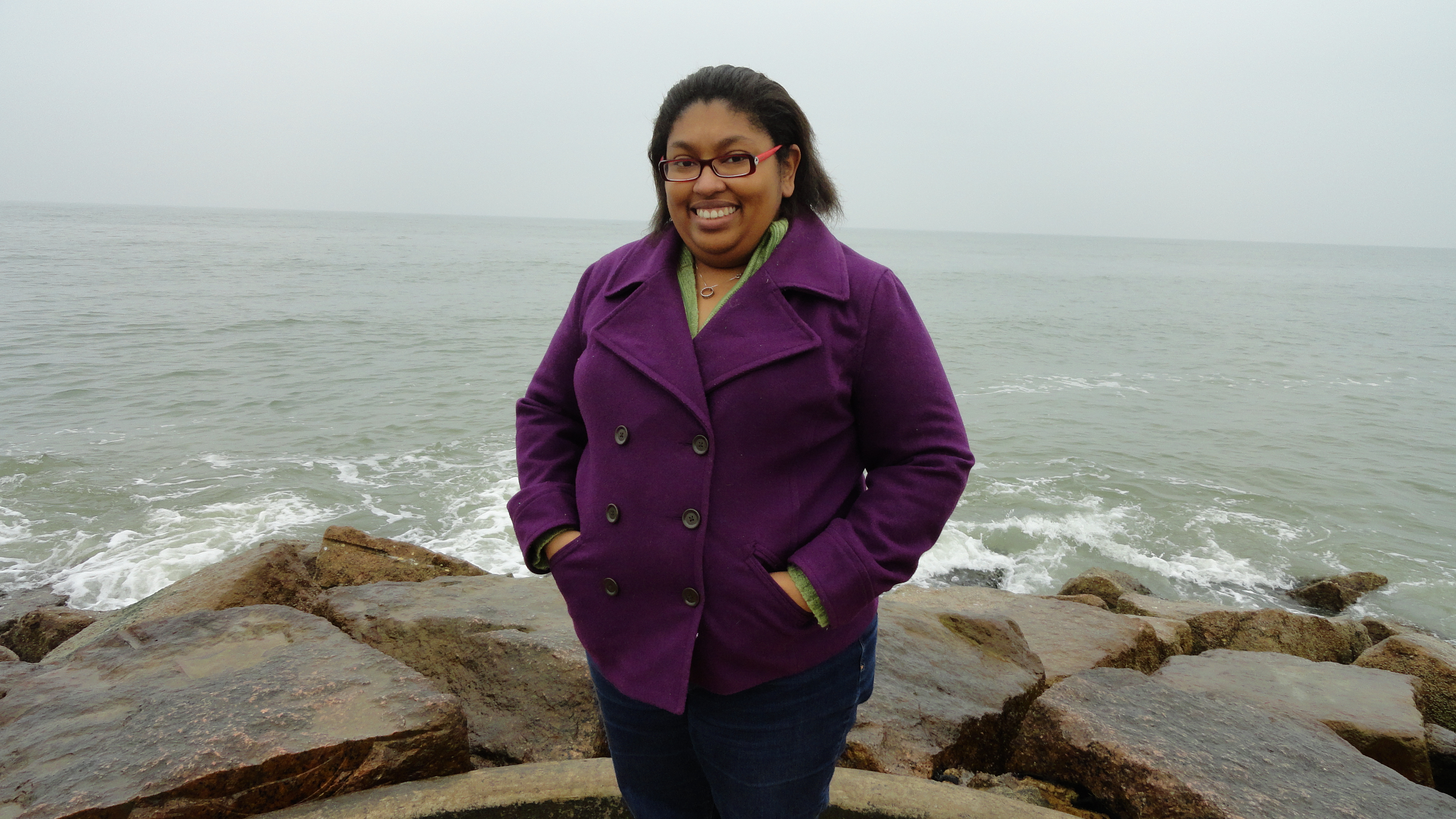


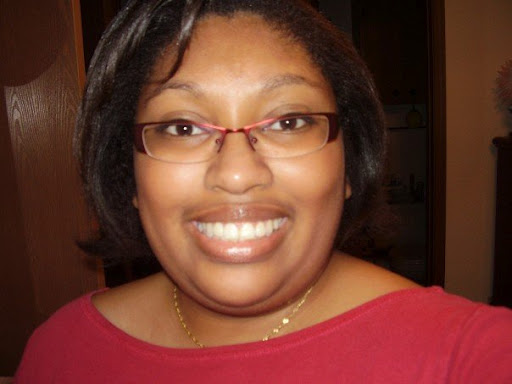

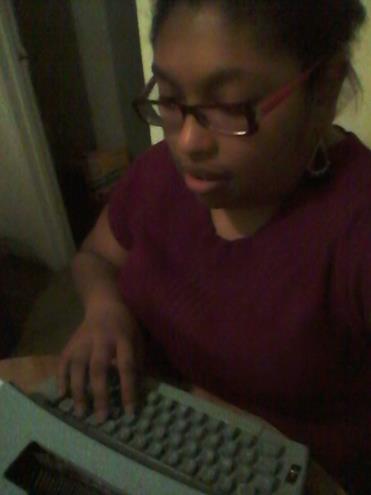 Despite it all, I always had my stories.
 I became a writer because I was raised as a storyteller.




 Icess Fernandez Rojas